Self-Employed and Buying an EV? Here's How to Get the Best Rate
Lakshay Khanna·06 June 2026
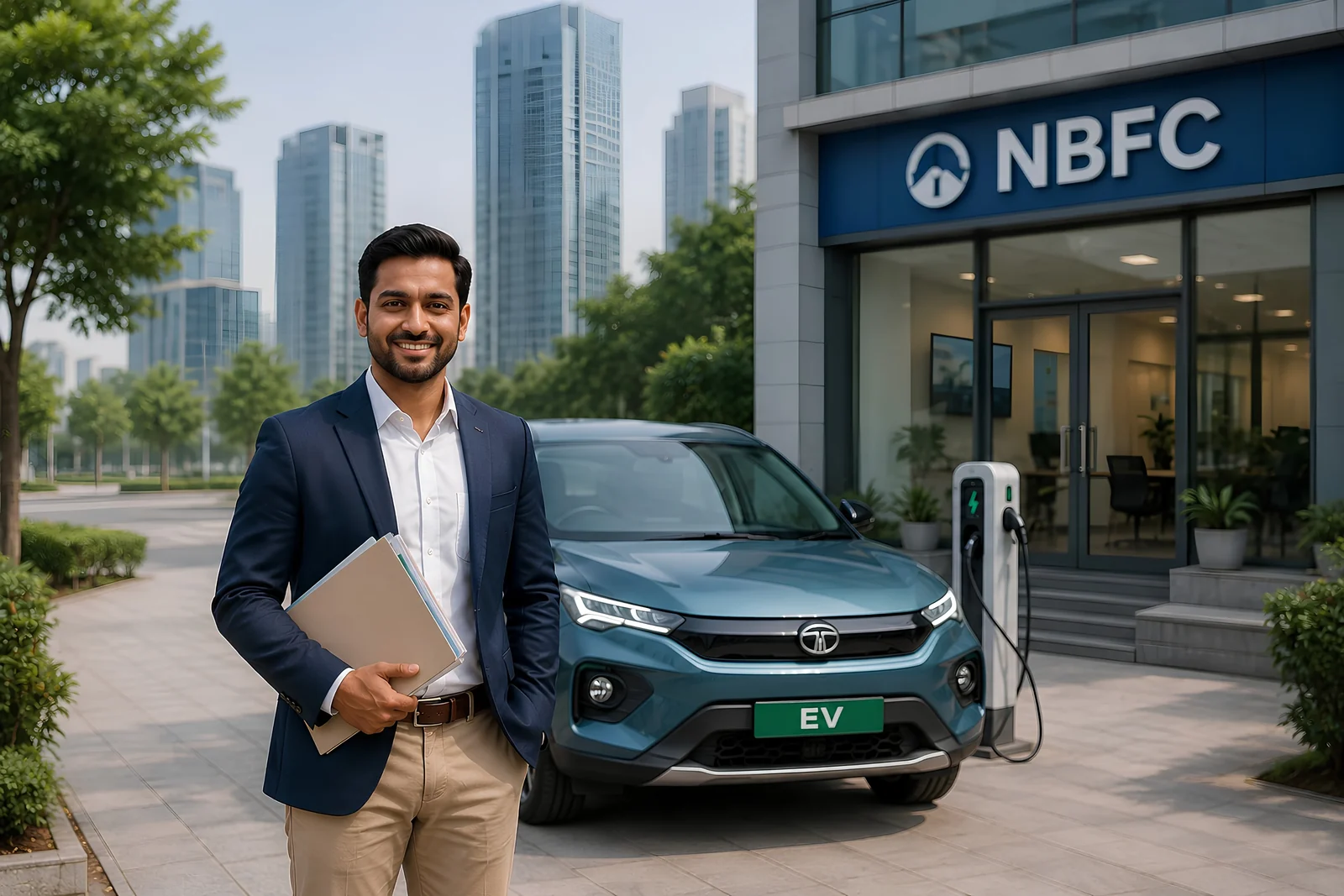
A friend who runs a small interior design setup wanted to buy a Nexon EV. Good business, clears well over a lakh a month most months. He walked into his bank expecting a red carpet, because in his head, "I earn more than my salaried friends, so I'll get a better deal."
He got quoted 16.5 percent. His salaried friend with half his income had got 13.
He was genuinely offended. "Main double kamaata hoon aur mujhe mehnga rate? Yeh kaisa insaaf hai?"
It's not about fairness, I told him. It's about provability. And the frustrating part is that most self-employed people leave a better rate on the table simply because they don't know how lenders read them. The good news: with a bit of preparation, a self-employed borrower can absolutely close most of that gap. Here's how.
First, understand why your rate is higher
Quick, because the fix depends on getting this. A lender prices on how confidently they can verify your income. A salaried person's income is documented by an employer and lands predictably, easy to verify, low risk, low rate. Our salaried vs self-employed breakdown shows exactly how a lender reads each profile side by side.
Yours is self-reported. And here's the kicker, most self-employed people file their ITR to minimise tax, so the official income on paper looks far smaller than what you actually earn. The lender underwrites the small ITR number, not your real income, and prices in the uncertainty. That's where the higher rate comes from. It's not a penalty for being self-employed, it's the cost of your income being harder to prove.
Once you get that, every fix below is just about making your income easier to prove.
| Borrower profile | Lender | Typical rate | EMI on Rs 10L / 5 yr | 5-year interest cost |
|---|---|---|---|---|
| Salaried, clean docs | Bank | ~13% | Rs 22,753 | Rs 3.65L |
| Self-employed, clean ITR | Bank | ~13.5% | Rs 22,990 | Rs 3.80L |
| Self-employed, lean ITR | Bank | ~16.5% | Rs 24,646 | Rs 4.79L |
| Self-employed, lean ITR | NBFC (Credifin) | ~14% | Rs 23,267 | Rs 3.96L |
Fix 1: Make your bank statement do the talking
Your business bank statement is your single most powerful tool, often more than the ITR. Lenders, especially NBFCs, read it closely.
So in the months before you apply, make it tell a clean story. Route your real income through the account instead of keeping everything in cash. Keep a healthy closing balance rather than letting it scrape zero. Avoid bounced payments. A strong, consistent 12-month statement showing real turnover can pull your rate down meaningfully, because it shows the lender the income your ITR is hiding. The same logic underwrites any business loan you take later for the firm.
Fix 2: Think about your ITR a year ahead
This is the big, long-game lever, and it's a real trade-off.
If your ITR drastically understates your income, you have a choice. Keep filing lean and save tax, but accept higher loan rates and tougher approvals. Or start filing closer to your actual income a year or two before you plan to borrow, pay more tax, but build a profile that gets you salaried-style rates from a bank.
For a one-off scooter loan it's not worth restructuring your taxes. For a big EV car loan, or if you borrow regularly for the business, a cleaner ITR can save you far more in interest over time than the extra tax costs. Worth a conversation with your CA before you buy.
Fix 3: Keep GST and filings current
If you're GST-registered, keep your returns filed and up to date on the GST portal. Lenders pull GST data to cross-check your real turnover, and current, clean filings work in your favour, sometimes unlocking better rates or specific business-loan schemes. A recent filing gap, even a couple of months, can flag your file and cost you. Get current before applying.
Fix 4: Pick the right lender for your profile
This decides more than people realise.
If your ITR is clean and reflects your real income, a bank may give you a salaried-style rate, go there. If your ITR is conservative and understates what you earn, a bank will quote you poorly or reject you, because it only sees the ITR. Go to an NBFC like Credifin instead, which reads your bank statement turnover and assesses your real cash flow. The same logic applies if you're comparing options in the broader EV loan market.
My designer friend's mistake was insisting on a bank when his ITR was lean. The bank could only see the small number. An NBFC would have read his actual account activity and priced him far better.
| Income signal | How a bank weighs it | How an NBFC weighs it |
|---|---|---|
| ITR (last 2 years) | Heavy | Moderate |
| Business bank statement | Light | Heavy |
| GST returns | Moderate | Moderate |
| Real cash flow | — | Heavy |
| Credit score (CIBIL) | Heavy | Moderate |
Fix 5: Bring everything, ready, on day one
Self-employed applications stall for weeks because applicants produce documents one at a time. Have it all ready upfront: two years of ITR with computation, a 12-month business bank statement, GST returns if registered, business proof, plus the usual PAN and Aadhaar with a matching address. A complete file gets assessed fast. A drip-fed one drags on and sometimes gets abandoned.
Back to my friend
He didn't restructure his whole tax situation for one car, that would've been overkill. Instead he did the practical things. Cleaned up his business account for a few months so it showed his real turnover clearly. Got his GST current. Then, instead of forcing the bank, he applied through an NBFC that read his bank statement.
The 16.5 percent quote became around 14. Not quite his salaried friend's 13, but most of the gap closed, just by being assessed on his real income instead of his tax-saving ITR.
"Bas dikhane ka tareeka badla, kamaai toh wahi thi." He didn't earn a rupee more. He just made the income he already had visible to the right lender. That's the entire game for self-employed borrowers.
And for the bigger picture, he decided to file a bit more honestly going forward, so next time, for the office expansion loan against property he's planning, he'll qualify at bank rates. More tax now, cheaper credit later. The trade-off every self-employed person eventually weighs.
Where Credifin fits
This is core to what we do. As an NBFC, we assess self-employed and business owners on bank statement turnover and real cash flow, not just the ITR. So if you earn well but file lean, the bank that quoted you high or rejected you wasn't wrong by its rules, it just couldn't see past the tax return. We can.
We finance EVs across India, online, read your actual business income, and work with GST and bank statement data to price you fairly. Whether it's an electric two-wheeler, an e-rickshaw, or an EV car, rates land 13 to 19 percent depending on profile, with a decision in 3 to 7 working days. If your ITR is genuinely clean and a bank will give you 12 to 13, we'll tell you to take it. If it's lean, like most self-employed files, we're usually your better rate. The same logic also fits if you're later financing a battery replacement.
Bottom line
A self-employed borrower's rate isn't about how much you earn, it's about how provable your income is. The higher quote you get is the cost of a lean ITR hiding your real earnings, not a penalty for being your own boss.
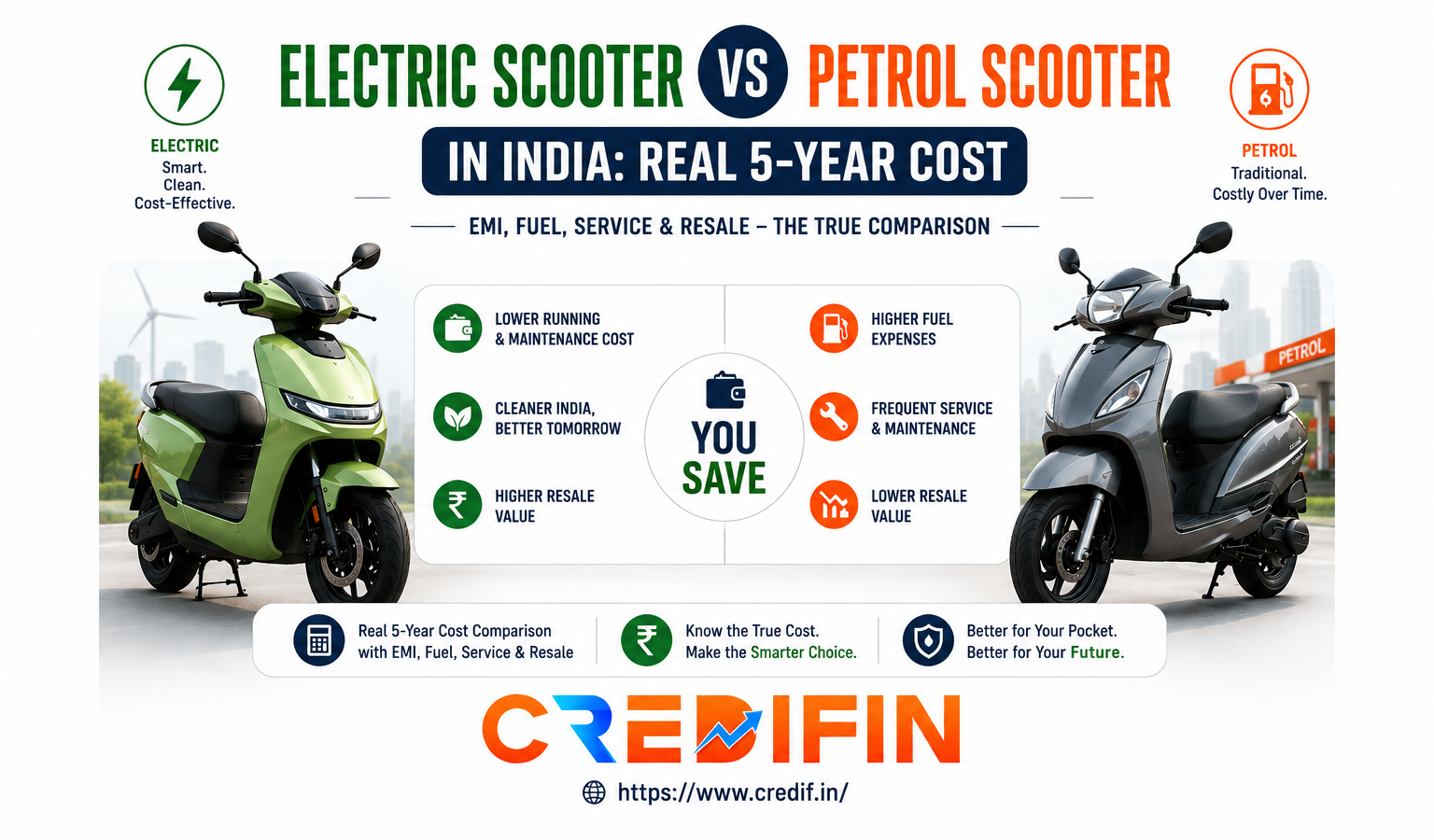
Close the gap by making your bank statement show real turnover, keeping GST current, considering a cleaner ITR if you borrow often, and crucially, going to an NBFC if your ITR understates your income. Bring a complete document file day one. Do that and you'll get assessed on your real income, which is the whole point, instead of the small number on your tax return. And if you're still weighing the EV decision itself, our EV vs petrol scooter cost breakdown walks through the 5-year economics.
FAQs
Why is my EV loan rate higher even though I earn well?
Because your income is self-reported and your ITR likely understates it. Lenders price on provable income, so the lean ITR drives the higher rate.
How can a self-employed person get a lower rate?
Show real turnover on your bank statement, keep GST current, consider filing a cleaner ITR if you borrow regularly, and apply through an NBFC if your ITR is conservative.
Should I file a higher ITR just to get a better loan?
For a one-off small loan, no. For large or repeat borrowing, often yes, the interest saved over time can outweigh the extra tax. Discuss with your CA.
Bank or NBFC for a self-employed EV loan?
Clean ITR reflecting real income, a bank may give the best rate. Conservative ITR, an NBFC that reads your bank statement will usually serve you far better.
What documents do I need?
Two years ITR with computation, 12-month business bank statement, GST returns if registered, business proof, PAN, and Aadhaar with matching address. Bring it all upfront.
Does GST registration help my loan?
Yes, if filings are current. Lenders cross-check turnover via GST, and clean recent filings can improve your rate. A filing gap can hurt.
How much can I borrow for an EV?
Depends on your assessed income and profile. With a strong bank statement, self-employed borrowers finance everything from scooters to premium EV cars.
What rate range applies today?
Roughly 12 to 19 percent. Clean, provable income sits near the bottom; lean ITRs sit higher unless you go to an NBFC that reads your real cash flow.
Ready to apply?
Self-employed and want a fair rate on your EV? Apply with Credifin online. We assess you on your real business income and bank statement, not just a tax-saving ITR, and price you on what you actually earn. Decision in 3 to 7 days, pan-India.
This might catch your interest