Secured vs Unsecured Loans in India: Which One Should You Actually Take?
Lakshay Khanna·12 September 2026

Most people ask for "a loan" without knowing there are really only two kinds.
In the first kind, you give the lender something to hold on to. Your house papers, your car's RC, gold. In the second kind, you don't give anything, and the lender just trusts that you'll pay. That one difference ends up deciding almost everything else: the rate, the amount, how long you get to repay, and what happens if a bad year hits.
I've seen people at the same income level paying 10% and 21% on loans of the same size. Usually the person paying 21% didn't know a cheaper option existed for them. So let's go through it properly.
Not sure which one you'd even qualify for?
Credifin lends both ways and will tell you which route costs less before you apply anywhere. Decision on a clean file in 3 to 7 working days.
Check your eligibility →Secured loans, in plain words
A secured loan has an asset behind it. Banks and NBFCs call that asset collateral. In India it's usually one of these:
- a house or flat (home loan)
- a shop, plot or commercial building (loan against property, or LAP)
- a vehicle: car, bike, e-rickshaw
- gold
- an FD or LIC policy
People often miss this part: you keep using the asset. You still live in the house. The e-rickshaw still runs its route every morning. The lender only holds a charge on it, on paper.
If you stop paying for several months, then the lender can move to recover it. That process has legal notices and waiting periods attached. It does not happen because you were late one month.
Since the lender has a fallback, they relax a bit. Lower rate, bigger amount, longer tenure.
Unsecured loans
Personal loans, credit cards, most pay later products (Flipkart Pay Later, Amazon Pay Later and so on), and a lot of small business loans are unsecured. Nothing is pledged.
So if you don't pay, what can the lender do? Calls, a legal notice, and a default entry on your CIBIL report. That's about it. They know this going in, so they charge more and are fussier about whom they approve.
It's why the same bank that gave your uncle a home loan at 8.75% will quote him 15% for a personal loan. His profile didn't change. Only the bank's risk did.
The comparison
Side by side
| Secured loan | Unsecured loan | |
|---|---|---|
| Typical rate (2026) | 8.5% to 16% | 11% to 28% |
| Amount | 60–90% of asset value | usually ₹25,000 to ₹25 lakh |
| Tenure | 3 to 30 years | 1 to 5 years |
| Approval time | 3 days to 3 weeks | same day to a week |
| CIBIL needed | flexible, 600+ often okay | mostly 700+ |
| What's at risk | the pledged asset | credit score, legal action |
| Tax benefit | home loan (80C, 24b), education loan (80E) | none, unless used for business |
These are rough market ranges across banks and NBFCs, not an offer from anyone.
Let me show you the actual rupee difference
Take ₹10 lakh over 5 years.
On a loan against property at 10%, the EMI comes to roughly ₹21,250 and you pay around ₹2.75 lakh as interest in total.
On a personal loan at 18%, the EMI is about ₹25,400. Total interest, about ₹5.24 lakh.
That's ₹2.5 lakh extra for the same money, which is basically a used Alto. People don't notice it because it leaks out ₹4,000 a month instead of all at once.
Tenure makes it worse. A LAP can go 15 years if you want a lighter EMI. A personal loan will almost never go beyond five, so even if the EMI pinches, you can't stretch it.
When I'd go secured
If the amount is big, say anything over ₹5–7 lakh, a secured loan is nearly always the smarter route. Unsecured lending at that size is either expensive or just not available unless you're salaried at a large company. That's what loan against property and home loans exist for.
The self-employed should look here first too. A kirana owner in Jalandhar might take home ₹70,000 a month while his ITR shows ₹3 lakh a year, because that's how his CA filed it. A bank reading that ITR will cut the personal loan amount or reject it outright. With a secured loan, the lender cares more about the property and the bank statements than about one tax form.
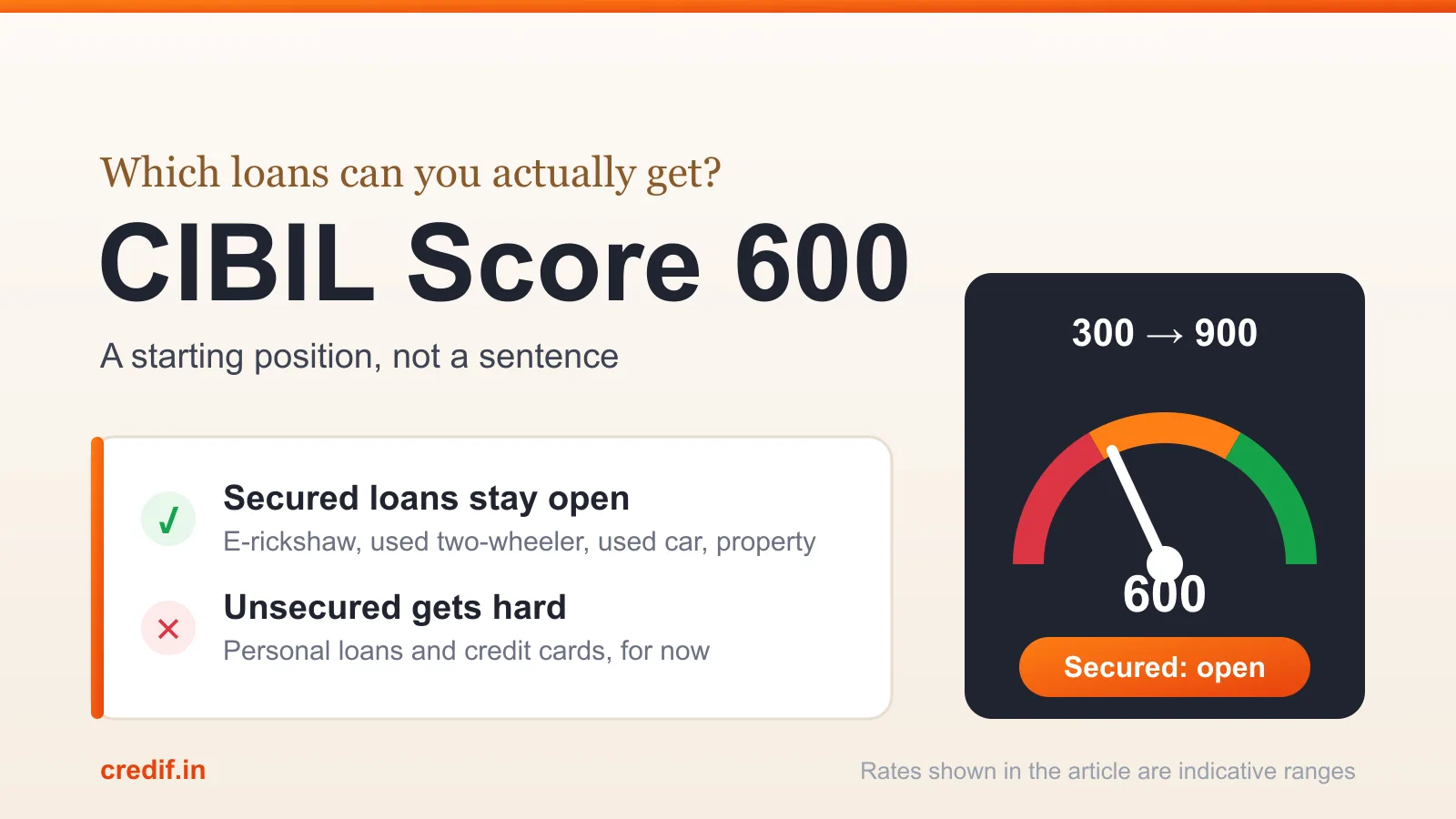
Low CIBIL is another reason. Somewhere around 620–680, unsecured doors mostly close. Secured ones don't, because the asset covers the lender. We've written about which loans you can get at a 600 CIBIL score separately if that's you.
And then there are assets that pay for themselves. An e-rickshaw loan is secured by the e-rickshaw, and a decent route brings in ₹20,000–35,000 a month. The EMI gets covered from the vehicle's own earnings. Hard to argue with that.
One more use people forget: clearing expensive debt. If you're carrying two personal loans and a credit card balance, folding them into one LAP at roughly half the rate can free up a lot of monthly cash.
When unsecured is fine (even better)
Small, urgent stuff. A ₹1.2 lakh hospital bill, a laptop, a gap in wedding expenses. Mortgaging a property for that is overkill, and the valuation and legal fees alone on a LAP can be ₹15,000–40,000.
If you don't own anything to pledge, which is honestly most people under 30 who rent, unsecured is just what's available.
If you'll close it within a year, the high rate matters less. 18% on ₹2 lakh for twelve months is roughly ₹20,000 in interest. Not great, not a disaster.
And some people simply don't want their parents' house tied to a loan, full stop. Paying a few percent more for that peace of mind is a fair choice.
Want the number for your own case before you decide?
The eligibility check takes a few minutes and needs no documents. We read bank statements and real income, not just an ITR.
Check your eligibility →Mistakes I keep seeing
The most common one: someone needs ₹8 lakh to expand a shop, gets turned down for a business loan at one bank, and walks out with an ₹8 lakh personal loan at 20%. Meanwhile they own the shop. They could have pledged it and paid 11–13%.
The reverse also happens, where someone pledges property for a ₹2 lakh need and loses a big chunk of it to processing and legal charges.
Foreclosure terms get ignored a lot. Since 1 January 2026, RBI's pre-payment rules bar foreclosure charges on floating-rate loans to individuals, and on business loans to individuals and small enterprises, with some lender-type exceptions. Most personal loans are fixed-rate, so they can still charge 2–5% if you close early. Ask which one you are being quoted, and get it in writing before signing.
Then there's the belief that pledging something means automatic approval. It doesn't. The lender still wants to see money coming in. If your bank statement is basically empty, a property won't save the application.
Last one, and it hurts people later: piling up small unsecured loans. Three pay later accounts plus two app loans looks bad on a credit report even if every EMI is paid on time. When that person applies for a home loan two years later, the underwriter sees all of it.
How a lender looks at your file
Roughly three questions, in this order. Can this person pay? If they don't, what can we recover? And how painful will recovery be?
On a secured loan the second question has a decent answer, so the first gets looked at a little more kindly. On an unsecured loan there is no second question, so your salary credits, existing EMIs and spending patterns get checked line by line.
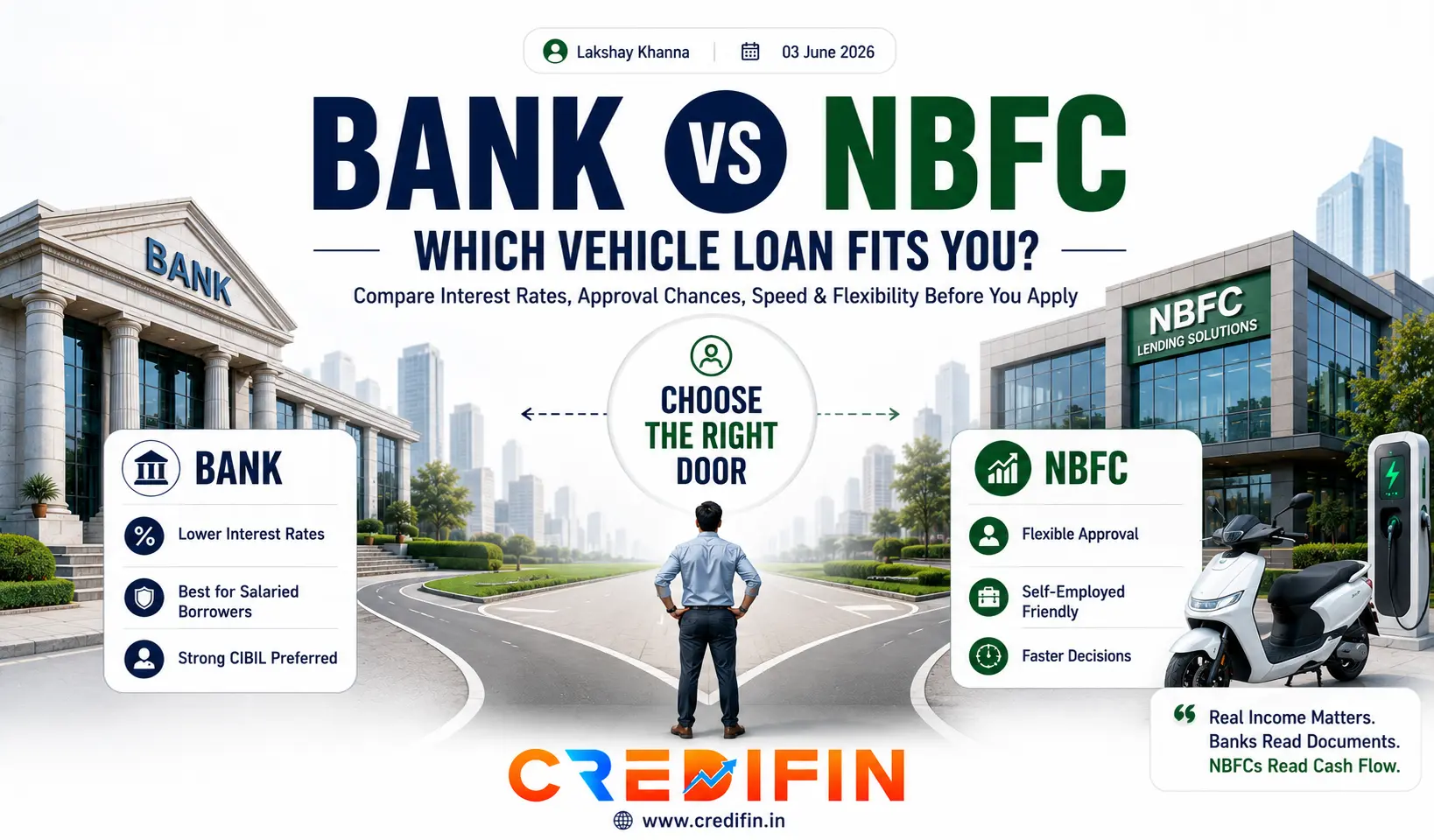
This is also why NBFCs do so much secured lending for small business owners and drivers. They've built their whole process around reading bank statements and valuing vehicles or property, not around ITRs. If you're weighing that choice, see our piece on bank vs NBFC for vehicle loans.
If you just want a quick answer
When these point in different directions, let the amount decide. For small amounts, take the unsecured loan and close it quickly. For big ones, pledge something and save the lakhs.
FAQs
Is a secured loan always cheaper?
For the same person at the same lender, almost always. The rare exception is a salaried borrower with an 800+ score who gets a personal loan at 10.5% while a used car loan is quoting 13%. For most people, secured works out cheaper.
Can I get a secured loan with a low CIBIL score?
Yes. NBFCs approve scores in the 600–680 range fairly regularly when there's an asset involved. You'll pay more than someone at 750+, but approval is realistic. To work on the score itself, read how to improve your CIBIL score.
Will I lose my house if I miss one EMI?
No. One missed EMI means a late fee and a mark on your credit report. Recovery under SARFAESI begins only after 90 days of non-payment, with notices first. You get time to catch up.
LAP or business loan, which is better for my shop?
Above ₹10 lakh, a LAP usually wins on rate and tenure. Under ₹10 lakh, or if you don't own the premises, an unsecured business loan is quicker. Plenty of owners use both.
Is a bike or car loan secured?
Yes, the vehicle is the collateral. That's why a two-wheeler loan gets approved for people a personal loan would turn away.
Does a secured loan improve my CIBIL more?
Not directly. CIBIL mostly cares whether you pay on time. That said, a longer loan builds a longer repayment record, and having both secured and unsecured accounts in your history counts slightly in your favour.
Still unsure?
Credifin offers both kinds: secured home, property, vehicle and e-rickshaw loans, and unsecured personal and business loans. If you walk into any of our branches across 14 states, a loan officer will look at your real numbers and tell you which route costs less before you apply anywhere.
Ready when you are
Secured and unsecured lending across 14 states, assessed on your real numbers.
Check your eligibility →Talk to Credifin
Credifin is an RBI-registered NBFC lending across 14 states and 200+ locations. CRISIL BBB- / Stable.
079651-74500 | info@credif.in
Find your nearest branch →
Credifin Limited is an RBI-registered NBFC, CRISIL BBB-/Stable. Loans at the sole discretion of the company. Rates mentioned are indicative market ranges, not an offer.
This might catch your interest