What Is CIBIL Score and How to Improve It (2026 Guide for Beginners in India)
Lakshay Khanna·9 May 2026
Deepak applied for a personal loan last year. Government job, decent salary, always paid his bills on time. He figured it would be straightforward.
The bank called him back and said his application couldn't be processed. "CIBIL low hai," the executive said on the phone.
He asked what that meant. The executive explained it briefly. Deepak had no idea this number even existed, let alone that it had quietly been working against him.
That's how most people find out what is CIBIL score — not from a financial planning session, but from a rejection call.
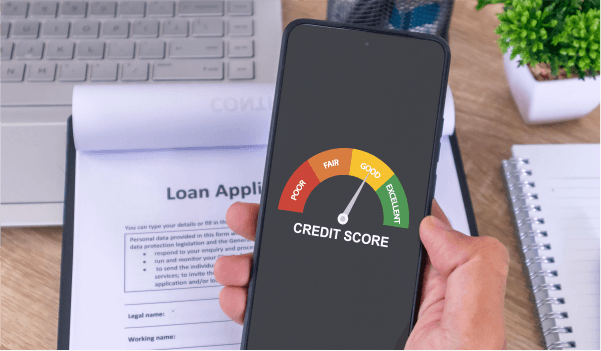
What Is CIBIL Score — Simply Put
CIBIL stands for Credit Information Bureau India Limited. It's an organisation that collects repayment data from banks and lenders across the country. Every time you pay an EMI, miss one, use your credit card, or take a new loan — that information gets reported to CIBIL.
They compile it into a three-digit score. 300 to 900.
Higher the number, better your repayment history looks to lenders. Banks and NBFCs check this score before deciding whether to give you a loan and at what interest rate.
That's it. That's what the number is. It's not a judgment on your character — it's a data summary of how you've handled borrowed money.
How CIBIL Score Works
| Score Range | Meaning | Loan Chances |
|---|---|---|
| 750 to 900 | Excellent credit history | Strong approval chances, better rates |
| 700 to 749 | Good | Mostly approved, standard rates |
| 650 to 699 | Average | Difficult at banks, possible at NBFCs |
| 600 to 649 | Low | Rejection likely from most lenders |
| Below 600 | Poor | Very hard to get approved anywhere |
| NH or -1 | No credit history at all | Neutral — not bad, just unknown |
The score isn't fixed. It updates every month based on your behaviour. Someone at 610 today can realistically be at 720 in a year — if they're consistent.
CIBIL Score Components: What's Actually Inside the Number
The score isn't a single thing. It's calculated from five separate factors, each weighted differently. Understanding the weighting helps you focus on what actually moves the needle.
| Factor | Weight | What It Measures | How to Improve |
|---|---|---|---|
| Payment History | 35% | Whether EMIs and credit card bills are paid on time | Auto-debit every EMI. Never miss a date. |
| Credit Utilisation | 30% | How much of your credit limit you actually use | Keep credit card balance under 30 percent of the limit |
| Length of Credit History | 15% | Average age of all your credit accounts | Don't close old credit cards without reason |
| Credit Mix | 10% | Balance between secured and unsecured loans | Mix of credit card + a small loan reflects better than only cards |
| New Credit (Inquiries) | 10% | Recent loan and credit card applications | Limit applications to 1 to 2 in any 6-month window |
Two factors — Payment History and Credit Utilisation — together make up 65 percent of the score. If you only fix two things, fix these two.
Hard Inquiries vs Soft Inquiries: What's the Difference?
A "hard inquiry" happens when you apply for a loan or credit card and the lender pulls your CIBIL report to make a decision. Each hard inquiry dips your score by 5 to 10 points and stays on your report for two years.
A "soft inquiry" happens when you check your own score, when an employer runs a background check, or when a lender pre-screens you for a marketing offer. Soft inquiries do not affect your score at all.
The practical takeaway: checking your CIBIL on cibil.com, Paytm, or BankBazaar is free and harmless — do it once every few months. Applying for three different personal loans in two weeks because the first two said no — that genuinely hurts. Each "no" leaves a hard inquiry mark, and the next lender sees them all stacked up.
Why Your CIBIL Score Matters More Than You Think
It affects more than just approval. It affects cost.
Two people apply for the same home loan. One has a CIBIL of 780. One has 670. The first person gets approved at 9 percent. The second gets rejected — or if approved somewhere, maybe at 12.5 percent. Over a 20-year loan of Rs 30 lakh, that difference in rate adds up to several lakhs in total interest paid.
There's also a compounding problem. When you apply for a loan and get rejected, the rejection itself shows up on your credit report. If you then apply somewhere else and get rejected again — now you have two rejections. Each application also creates a hard inquiry that slightly dips your score. Multiple rejections in quick succession can create a downward loop that's genuinely hard to escape.
Most people only understand this after it's happened to them. Worth knowing it beforehand.
Common Reasons Your CIBIL Score Is Low
| Reason | What Happens | Impact on Score |
|---|---|---|
| Late or missed EMI | Payment history is the biggest factor | Big drop |
| High credit card usage | Using 70 to 80 percent of your limit looks risky | Moderate drop |
| Multiple loan applications at once | Each creates a hard inquiry | Small but cumulative |
| Settled loans (not fully closed) | "Settled" is a red flag to lenders | Major negative mark |
| Guarantor for someone who defaulted | Their problem becomes your CIBIL problem | Can be severe |
| No credit history | Score stays NH or -1 | Not negative, but unhelpful |
The guarantor situation is one people really don't anticipate. Someone asks you to co-sign their loan, you say yes thinking it's a favour — and if they stop paying, it hits your report too.
CIBIL Bands: Bank vs NBFC Approval Reality
A 650 score doesn't mean the same thing at every lender. Banks and NBFCs treat the same number very differently. Here's what each band actually looks like in practice.
| CIBIL Band | Banks (PSU + Private) | NBFCs like Credifin |
|---|---|---|
| 800+ | Best rates, instant approval | Best rates, instant approval |
| 750 to 799 | Standard approval, good rates | Easy approval, marginally higher rates |
| 700 to 749 | Approved at standard rates | Easy approval |
| 650 to 699 | Difficult, often declined | Possible with steady income |
| 600 to 649 | Mostly declined | Possible at higher rate, requires income proof |
| Below 600 | Almost always declined | Possible with co-applicant or collateral |
| NH or -1 (no history) | Difficult — no data to evaluate | Possible with secured products or small loans |
For a deeper read on why banks and NBFCs evaluate borrowers differently, see our guide on NBFC vs Bank for small business loans in North India.

How to Actually Improve Your CIBIL Score — Practical Steps
Pay on time. Every month. This is non-negotiable. Set up auto-debit for every EMI so you don't miss it because you were busy or forgot.
Bring your credit card balance down. If you have a Rs 1 lakh limit and you're spending Rs 85,000 on it, that 85 percent utilisation is dragging your score. Try to stay under 30 to 35 percent of your limit. If that's hard, ask your bank to increase your limit — same spending, lower utilisation ratio.
Stop applying everywhere at once. If you need a loan, research first, then apply to one or two places maximum. Each hard inquiry counts.
Pull your credit report and read it. Errors happen — a loan that was closed three years ago still showing as open, a payment marked late when it was on time. These errors affect your score and you can get them removed. Visit the official CIBIL website, raise a dispute, wait about 30 days. It works.
If you have zero history, start small. A secured credit card — where you deposit Rs 10,000 to 20,000 as collateral and get a card against it — is an easy entry point. Use it for small purchases, pay the full bill every month, and within 8 to 10 months you'll have a usable score.
Don't close old credit cards without a reason. The age of your credit history matters. A card you've had for six years is actually helping your score even if you barely use it.
Stay consistent for 8 to 15 months. Score updates monthly. Most borrowers see meaningful improvement only after a year of disciplined behaviour. Don't expect a quick fix.
Score Recovery Timeline: What to Expect Month by Month
Improvement isn't linear. The first few months feel slow because the system is waiting for new data to outweigh the old. After month 4, things start to move faster. Here's a realistic timeline for someone starting at 610.
| Period | What You Do | Expected Score Movement |
|---|---|---|
| Month 0 | Starting score: 610 | Baseline |
| Months 1 to 3 | Auto-debit on every EMI, credit card balance under 30% | +5 to +15 points |
| Months 4 to 6 | Continue + clear any old "settled" loan + dispute report errors | +20 to +35 points |
| Months 7 to 12 | Continue. No new applications. Maintain low utilisation. | +30 to +50 points |
| Months 13 to 18 | Built track record. Score plateaus at new level. | 720 to 740 achievable |
A Real Example: Priya's Score Went From 608 to 741
Priya taught at a private school in Rohtak. She'd taken a personal loan during a difficult year and had been irregular with payments for about eight months. CIBIL had dropped to 608.
She wanted to apply for a home loan but knew she couldn't at that number.
She set up auto-debit for all EMIs. Paid her credit card bill in full every month — stopped carrying a balance. Didn't apply for any new credit for eleven months. Also got one error corrected — an old loan that was fully paid but still showed a small outstanding balance on her report.
Fifteen months later: score at 741. Home loan approved through an NBFC. Not the best rate, but approved and moving forward.
She didn't do anything special. She just did the basics without slipping.
How NBFCs Like Credifin Handle Low CIBIL
This is the real situation for a lot of people. You can't wait 14 months to rebuild. You need funds now.
Banks will largely say no below 720 to 730. That's just how they're structured.
NBFCs look at more than the number. Credifin, for instance, will look at your bank statements, whether your income is stable, how recent the defaults are, and whether your overall repayment capacity is there. A 670 score with steady income and a resolved old default looks very different from a 670 score with three recent missed payments.
It doesn't mean approval is guaranteed. But it means the conversation is possible — and that's where you start. The same flexible-underwriting approach applies across products: personal loan, business loan, loan against property, and even EV loans in Jalandhar.
Credifin is a fully RBI-registered NBFC, so every loan is documented and the rate is fixed. None of the informal-lender mess you sometimes see at the lower end of the credit market.
Mistakes Worth Avoiding
Settling a loan instead of clearing it fully. If you negotiate the bank down to Rs 40,000 on a Rs 60,000 outstanding — yes, the loan is "closed." But it shows as "Settled" on your report, which every lender reads as a warning sign. Pay the full amount if at all possible.
Ignoring your score until you need it. Checking it costs nothing. Free checks are available on cibil.com, Paytm, BankBazaar. Look at it once every few months. Problems are easier to fix when caught early.
Assuming the score is permanent. It isn't. It moves. Even a 560 score has been brought to 720 with consistent effort — it just takes time.
Disputing errors only when applying for a new loan. If you see a wrong entry on your report, file the CIBIL dispute immediately. The 20 to 30 day resolution window means you don't want to start when you're already in a hurry.
One Last Thing
What is CIBIL score at its core — it's just data. Your data. Based on your past behaviour with credit. And unlike a lot of things in life, it's actually something you can control and improve.
The earlier you start paying attention to it, the more options you have when you actually need a loan. Whether it's a home loan, a used car loan, or an electric bike loan, every product becomes cheaper and faster when your score is in the right band.
FAQs
What is considered a good CIBIL score in India?
750 and above is generally good. 800 plus gets you better interest rates. 700 to 749 is workable for most loans. Below 650 starts becoming difficult at banks but NBFCs like Credifin can still consider you.
How long does it take to improve CIBIL score significantly?
Realistically 8 to 15 months for meaningful improvement, depending on where you start and how consistent you are. Score updates monthly based on the previous month's behaviour.
Can I get a loan with a CIBIL score of 650?
Most banks won't approve below 700. NBFCs like Credifin will consider 650 depending on income stability, the reason behind the score, and overall repayment capacity. The conversation is possible.
Does checking my own CIBIL score affect it?
No. Self-checks are soft inquiries and do not impact your score at all. Check it once every few months on cibil.com, Paytm, or BankBazaar.
What if I have no CIBIL score at all (NH or -1)?
It shows as NH or -1. It is not negative, just neutral. Start with a secured credit card backed by a fixed deposit, or a small consumer durable loan, to build a history. Most lenders will then have data to work with within 6 months.
How do I fix an error in my CIBIL report?
Visit cibil.com, log in, and navigate to the dispute section. Enter the account number and what is incorrect. CIBIL contacts the lender to verify. Resolution usually takes 20 to 30 days.
Does a rejected loan application reduce my CIBIL score?
The rejection itself does not. But the hard inquiry from the application does — slightly. Multiple applications in a short time add up and can make a noticeable difference.
How is CIBIL different from Experian and CRIF?
CIBIL, Experian, CRIF High Mark, and Equifax are the four credit bureaus operating in India. They each calculate a separate score using slightly different models, but all draw from the same lender-reported data. CIBIL is the most widely referenced by Indian banks and NBFCs, but lenders may also pull Experian or CRIF for cross-verification.
Can I get a personal loan from an NBFC with a 600 CIBIL score?
Possible but not automatic. NBFCs like Credifin look beyond the score — bank statements, income stability, the reason for the low score, and existing obligations all matter. A 600 score with steady income and a resolvable old default is treated very differently from a 600 score with three recent missed payments.
Ready to Apply?
If your CIBIL is below the bank-approval threshold and you don't want to wait 14 months to rebuild, talk to Credifin. We look at the full picture — income, repayment capacity, the reason behind the score — not just the number. Get a quote online or visit our Mahavir Nagar branch in Jalandhar in person, next to Chirayu TVS Showroom.
This might catch your interest