NBFC or Private Bank: Which One Actually Works for Small Business Loans in North India?
Lakshay Khanna·11 April 2026
North India runs on small businesses. Hosiery units in Ludhiana. Auto parts dealers in Faridabad. Grain traders in Panipat and Amritsar. Sports goods shops in Jalandhar. Sabzi mandi wholesalers in Delhi. Steel fabricators in Meerut. Cycle parts suppliers in Ludhiana and Ambala. Textile traders in Panipat.
The region's economy moves because of people who built something for themselves. And that kind of work always needs money at some point.
Here is something that has been true for decades but nobody really talks about. When a small business owner in North India needs urgent cash, they usually do not go to a bank first. They go to someone they know.
You have heard it — "Yaar ik kaam kar, mujhe thode paise chahiye. Tu de de, main wapas kar dunga."
Or they walk to the local sahukar and borrow at whatever rate he names. Two percent a month. Three percent. Sometimes more. Nobody argues because the money came fast and without paperwork.
A dukaan owner in Batala needed ₹1.5 lakh before Diwali to stock up. His ITR was not filed properly so the bank said no. He got the money from a local lender the same day. By March he had paid back ₹2.1 lakh and was still not fully clear.
That is how money actually moves for small businesses in this part of the country. There is a better option now. One that gives you the speed of a money lender but with legal protection, fair rates, and actual documentation. That option is an NBFC.
Why Banks Are Not Always the Answer for Small Businesses in North India
The standard advice is: go to a bank. Safe, low interest, official. Not wrong — just incomplete.
Think about who actually runs small businesses across North India:
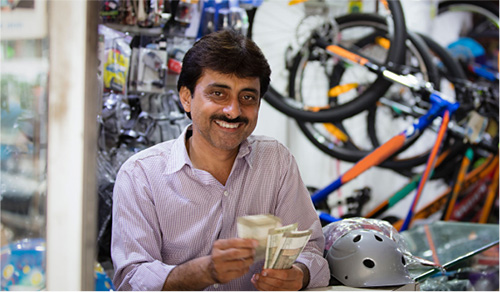
- A cycle parts supplier in Ludhiana or a hardware dealer in Ambala earning ₹70,000 a month who has never filed ITR
- A fruit seller in Delhi's Azadpur mandi clearing ₹80,000 to ₹1 lakh a month, almost entirely in cash
- A dhaba owner on the GT Road running through Panipat, Karnal, Moga, Ambala — doing solid business but with no formal accounts
- A fabric trader in Amritsar or Bhiwani whose income is mostly cash and whose CIBIL is average
- A young man in Faridabad who opened an auto repair shop and needs ₹3 lakh for equipment
- A woman in Nawanshahr or Hisar running a tailoring unit who needs a small loan to buy machines
- A grain dealer in Rohtak whose turnover is real but whose books are minimal
This is not an exception. This is the majority of small businesses in North India.
When any of these people walk into a private bank, the story is usually the same:
- ITR: Bank wants two to three years of filed returns — most do not have it
- CIBIL: Bank needs a score above 700 — many do not have that either
- Collateral: Bank wants property to pledge — a small shopkeeper rarely has that
- Processing: Takes three to four weeks — and often gets rejected before it even moves forward
The fruit seller earning ₹90,000 a month cannot explain that income on paper because it all came in cash. To the bank, he barely exists. But his stall is busy every single morning and he has been paying rent and running expenses without missing a beat for five years straight.
That is creditworthiness. Banks just cannot see it. And that is exactly where an NBFC like Credifin steps in.
Money Lender, Bank, or NBFC: Where They Actually Stand
Before comparing banks and NBFCs, it helps to see where all three stand for a North India small business owner.
| Factor | Money Lender | Private Bank | NBFC like Credifin |
|---|---|---|---|
| Interest Rate | 24% to 60%+ per year | 9% to 15% per year | 10% to 18% per year |
| Collateral | Jewellery, land, personal assets | Property usually needed | Flexible, case by case |
| CIBIL Needed | Not required | 700 and above | Flexible — not a hard barrier |
| Documentation | Almost none | ITR, GST, salary slips | Basic documents only |
| Approval Speed | Same day | 2 to 4 weeks | Few days |
| Loan Amount | ₹10,000 to ₹2 lakh | Higher but strict criteria | Flexible based on need |
| Legal Protection | None | Full legal structure | Full legal structure |
| Harassment Risk | High if payment delayed | None | None |
The money lender wins on speed but costs the most. The bank gives the lowest interest but most North India small business owners cannot qualify. The NBFC sits in the middle — reasonable interest, fast approval, flexible eligibility, full legal protection.
Banks vs NBFCs: What Actually Differs for Small Business Loans
Most people look at interest rates first. But there is more to it when choosing between a private bank and an NBFC for a small business loan.
Regulation and Funding
| Lender | Regulation & Funding |
|---|---|
| Private Banks | Regulated under RBI + Banking Regulation Act — take public deposits, which keeps funding costs lower and interest rates cheaper |
| NBFCs like Credifin | RBI regulated with more flexibility on eligibility and process — funding through market borrowing, slightly higher cost passed to borrower |
On paper, banks win on rate. In practice, for self-employed business owners across North India, that rate is irrelevant if they cannot qualify.
Approval Criteria
| Lender | Approval Criteria |
|---|---|
| Private Banks | Strict, template-based — CIBIL 700+ strictly required, 2–3 years ITR mandatory, collateral usually required, self-employed rarely approved |
| NBFCs like Credifin | Flexible, case by case — CIBIL below 700 also considered, bank statements accepted instead of ITR, collateral not always needed, self-employed actively considered |
Flexibility, Tenure, and Repayment Options
| Factor | Private Banks | NBFCs |
|---|---|---|
| Tenure Flexibility | Limited | High |
| Custom Repayment | Rare | Common |
| Foreclosure Rules | Strict | Flexible |
| EMI Restructuring | Difficult | Easier |
For a seasonal business — say a grain dealer in Panipat or a fabric trader in Amritsar whose income fluctuates — the ability to restructure EMIs or prepay without heavy penalties can make a real difference.
Credit Profile and Income: Where the Gap Shows Most
This is where the difference is most visible for North India's small business community. Before picking a lender, it helps to understand the benefits of MSME loans and how they support growth for owners who do not fit the standard banking profile. If you are based in Delhi NCR, our city-specific guide to a business loan in Noida for MSMEs walks through local eligibility, real EMI numbers, and the government schemes worth claiming. In Punjab's manufacturing belt, see our MSME loan in Ludhiana guide for hosiery and textile units.
| Parameter | Private Banks | NBFCs like Credifin |
|---|---|---|
| Required Credit Score | 700+ strictly | Below 700 considered |
| Informal Income Accepted | Rarely | Commonly |
| Self-Employed Approval | Selective and strict | Easier and more open |
| Approval Speed | 2 to 4 weeks | Few days to 1 week |
For the Azadpur fruit seller, the Rohtak grain dealer, the Faridabad auto repair shop owner — none of whom have salary slips or clean ITR — the NBFC path is the one that actually opens.
Where Credifin Fits in for North India Small Business Loans
Credifin is a Punjab-based NBFC offering MSME loans, EV loans, home loans, education loans, and more — increasingly working with small businesses across North India.
Being regionally rooted matters more than it sounds. They understand how a garment trader in Ludhiana actually earns. They know a hardware shop in Jalandhar, a fabrication unit in Faridabad, or a grain dealer in Panipat may clear ₹80,000 a month with very little on paper.
The documentation challenges that North India's traders face are not abstract to them. Running a Mumbai lending template on a business in Moga or Rohtak does not work, and they know that.
Credifin also has a strong track record on the government's Parivahan portal, registered as financer on the highest number of EV Registration Certificates among NBFCs in Punjab. That kind of ground-level presence takes years to build.
Hidden Charges: What to Watch Out For
A low interest rate can look great until you see the processing fee.
- Banks: Generally disclose charges upfront but prepayment penalties can catch you off guard
- NBFCs: May bundle costs into insurance premiums, documentation fees, or late fee structures
Always ask for the Key Fact Statement before signing. Total loan cost matters more than just the interest rate or the monthly EMI.
Who Should Go Where: Bank or NBFC?
| Your Situation | Go to a Private Bank if... | Go to an NBFC like Credifin if... |
|---|---|---|
| CIBIL Score | You have CIBIL above 700 | Your CIBIL is below 700 or you have no credit history |
| Income Documentation | You have 2 to 3 years of filed ITR | You do not have formal ITR but earn regularly |
| Income Type | You have stable salaried income | You are self-employed or run a small business |
| Timeline | You can wait 3 to 4 weeks | You need the loan quickly |
| Collateral | You have collateral to offer | You do not have property to pledge |
| Priority | Getting the lowest rate is the priority | Getting approved at all is the priority |
If you are building something new, our guide on how to choose the right business loan for a startup walks through the trade-offs worth weighing before you apply anywhere.

Two Business Owners, Two Different Outcomes
Two shop owners — one in Jalandhar, one in Panipat. Both earn around ₹60,000 to ₹70,000 a month. Both need ₹5 lakh for their business.
Owner A goes to a private bank. His ITR is inconsistent — income was only partially reported over the years. CIBIL is 680. Bank asks for audited accounts. He does not have them. Rejected at the screening stage, before anyone even looked at his business.
Owner B goes to Credifin. Bank statements show consistent monthly transactions. Income is verifiable through account activity. Repayment capacity is clear from the numbers. Loan approved.
Same income. Same need. Very different outcome. This is not unusual — it happens regularly for small business owners across North India.
Mistakes to Avoid When Applying for a Small Business Loan
- Applying at a private bank first without checking eligibility — a rejection affects future applications with other lenders
- Comparing only interest rates — always look at total loan cost including processing fees, insurance, and late charges
- Going to an unknown NBFC just because the bank said no — research the lender and verify their RBI registration on the official RBI NBFC directory
- Picking the longest tenure to reduce EMI — calculate how much extra interest accumulates over the full term
- Not asking about prepayment charges before signing — this can lock you into expensive terms even when you have money to repay early
One rejection can quietly reduce your chances with the next lender. Spend a day figuring out where you actually qualify before you apply anywhere.
Conclusion: The Best Loan Is the One You Can Actually Get
In 2026, the real comparison between banks and NBFCs is not just about interest rates.
Banks are cheaper on paper for borrowers who already have clean documentation, good CIBIL, and time to wait. For that profile, a private bank makes sense.
But for most small business owners across North India — in Delhi, Faridabad, Panipat, Rohtak, Ludhiana, Jalandhar, Moga, Ambala, Amritsar — that profile does not exist. They run real businesses, earn real money, and deserve real credit access.
A fruit seller in Azadpur who clears a lakh a month in cash is not less creditworthy than a salaried employee. He just does not fit the bank's checklist.
NBFCs like Credifin exist to bridge that gap. The best loan is not the cheapest one on paper. It is the one you can actually get, with terms you can actually manage.
Frequently Asked Questions
-
Are NBFC loans more expensive than bank loans?
Usually yes on interest rate. But for business owners who cannot qualify at a bank, an NBFC gives access to formal credit with full legal protection. The slightly higher rate is worth the approval compared to informal money lenders who charge 24%–60% annually.
-
Can I get a business loan from Credifin without ITR?
Yes. Credifin considers bank statements and other income proofs as valid alternatives to ITR for self-employed and small business applicants across North India.
-
Is an NBFC loan legally safe compared to a money lender?
Completely. Credifin is registered and regulated by the Reserve Bank of India. All loan terms are documented, interest rates are fixed, and there is no harassment risk that comes with informal lenders.
-
Does a bank rejection affect my chances at an NBFC?
Multiple rejections do affect your credit profile. Check which lender suits your profile before applying rather than collecting rejections from multiple lenders at once.
-
Why is Credifin a good choice for North India small business loans?
They understand regional business realities in Punjab, Haryana, and Delhi NCR. They offer flexible eligibility for self-employed applicants, accept bank statements instead of ITR, and process applications faster than traditional banks.
-
What is the interest rate on NBFC small business loans in North India?
NBFCs like Credifin offer small business loans at 10%–18% per annum depending on borrower profile, compared to 9%–15% at private banks. However, most small business owners in North India cannot qualify for bank rates due to strict ITR, CIBIL, and collateral requirements.
-
What CIBIL score is needed for a small business loan from an NBFC?
NBFCs like Credifin are flexible with CIBIL requirements. Even borrowers with a score below 700 or no credit history can be considered based on bank statements, business activity, and repayment capacity. Private banks strictly require CIBIL 700 and above.
This might catch your interest