The EV Tax Break Most 2026 Buyers Cannot Actually Claim
Vansh Budhiraja·08 August 2026
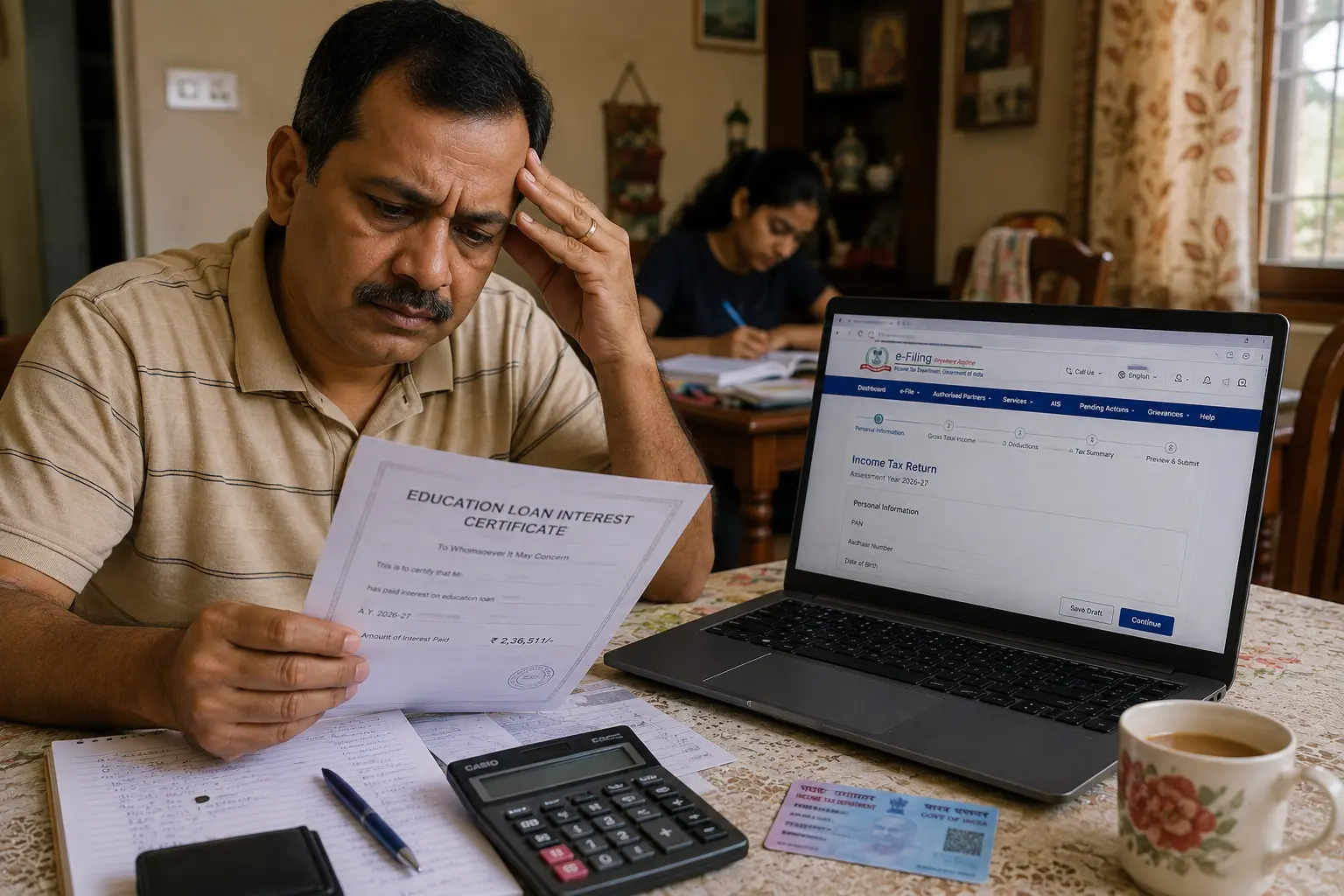
Sunita teaches at a school in Ludhiana. She bought an electric car early last year after a great deal of research, and she is the sort of person who researches properly. Spreadsheets. Printouts. A folder.
She had worked out her running cost, her insurance, her charging arrangement at home. She had also written a line into that spreadsheet for the income tax deduction on the loan interest. One and a half lakh a year, she had read. It was what made the whole purchase work on paper.
Then her CA looked at the sanction letter and told her she could not claim a single rupee of it.
She was certain he had made a mistake. He had not.
Before we start: this is general information, not tax advice. Tax rules change, and the right answer for your return depends on your circumstances and the year you are filing for. Confirm the current position on the Income Tax Department portal or with a qualified CA before you file anything.
Financing an electric vehicle?
Credifin finances electric two-wheelers and three-wheelers across India, with EMIs built around what you actually earn. Online application, quick decision.
Explore EV Loans →What Section 80EEB actually is
Section 80EEB allows an individual to deduct the interest paid on a loan taken to buy an electric vehicle, up to one and a half lakh rupees in a financial year, from their taxable income.
Only the interest. Never the principal. Same basic principle as Section 80E on education loans, which we have covered separately.
It applies to two-wheelers and four-wheelers. It does not apply to hybrids. The loan has to come from a bank or an NBFC, not from a relative however generous the terms happen to be. And the vehicle has to be registered in your own name — the name of the person claiming the deduction.
On paper it is one of the better deductions in the system. Bigger than most, and it lands hardest in the early years of a loan when the interest portion of your EMI is at its largest.
The date that kills it for most people
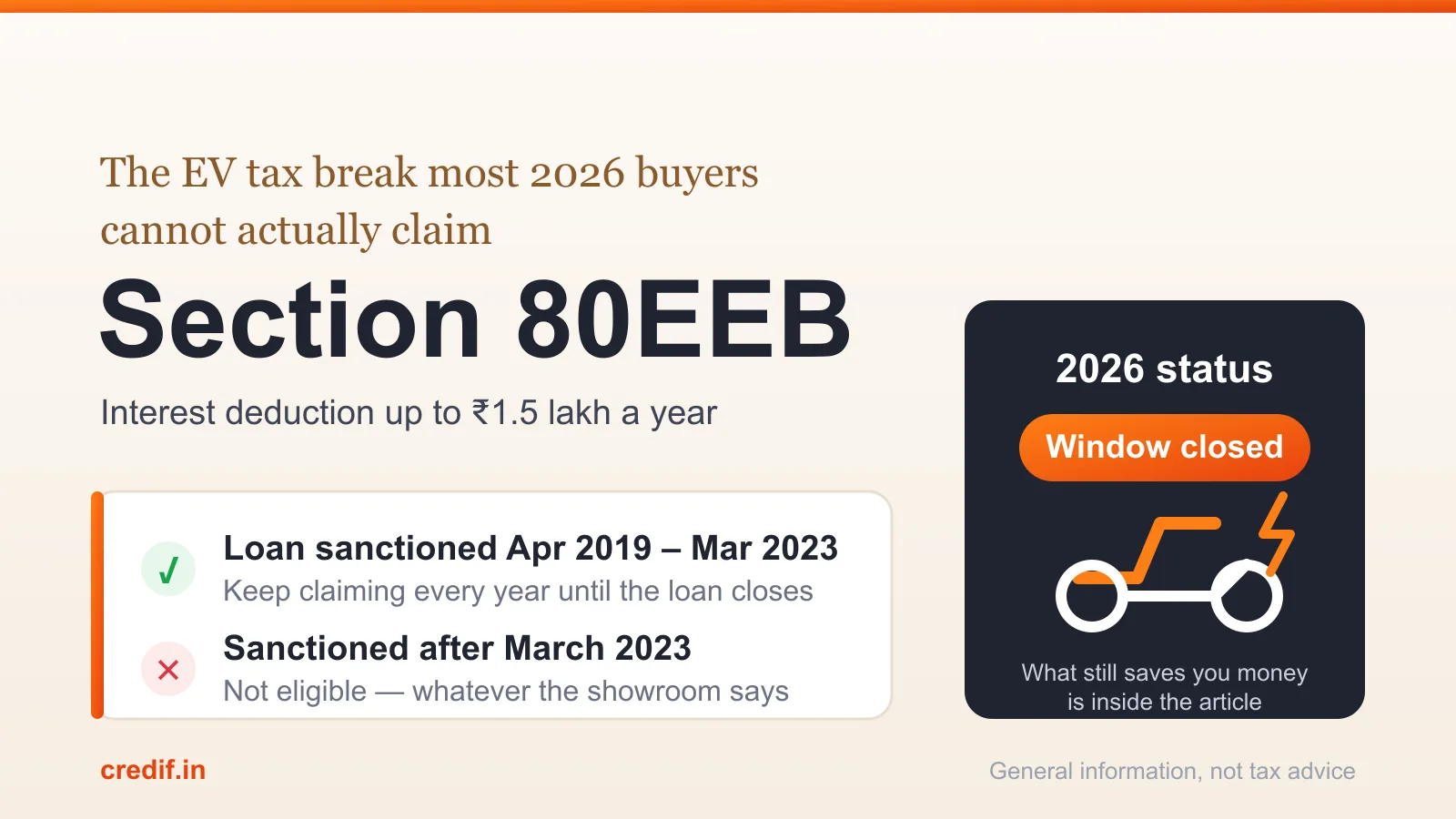
The statute is completely unambiguous here, and it is the sentence that sank Sunita's spreadsheet. The deduction applies only where the loan was sanctioned between 1 April 2019 and 31 March 2023.
Not the year you bought the vehicle. Not the year you are filing. The date printed on your sanction letter.
Loans sanctioned from 1 April 2023 onward do not qualify. There is no partial version, no reduced amount, no grandfathering by vehicle type. If your sanction letter is dated after March 2023, this section simply does not apply to you.
| Your sanction letter is dated | Can you claim 80EEB? |
|---|---|
| Before 1 April 2019 | No |
| 1 April 2019 to 31 March 2023 | Yes, subject to the other conditions |
| 1 April 2023 onward | No |
| You bought in 2026 | Almost certainly no |
So who does still benefit? Anyone whose loan was sanctioned inside that window and who is still repaying it. If that is you, you carry on claiming every year until the loan closes. A loan sanctioned in, say, February 2023 on a seven year tenure is still throwing off a deduction today and will keep doing so for a while yet.
That is a reasonably large group of people and a fair number of them have no idea they are in it. Which is the other half of the same problem. Some buyers are claiming a benefit they are not entitled to, and some are entitled to one they are not claiming.
Go and find your sanction letter. It takes two minutes and it settles the question.
The second catch, which trips up even the eligible
Suppose you passed the date test. There is one more condition and it is the one that quietly costs families the whole benefit.
Section 80EEB works only under the old tax regime.
The new regime is now the default. If you do not actively pick the old one at the time of filing, the system puts you on the new one, and the deduction goes with it. Most people take the default, because the headline rates look lower and the form is shorter and nobody explains what they are giving up.
Old tax regime
- Tax rates: higher
- Section 80EEB: available
- Section 80C, 80E and similar: mostly available
- Suits: people with real deductions
New tax regime
- Tax rates: lower
- Section 80EEB: not available
- Section 80C, 80E and similar: mostly gone
- Suits: people with few deductions
The new regime is not the villain in this story. If you have very little to claim, its lower rates can genuinely leave you better off, and plenty of people are right to take it.
But if you are carrying an eligible EV loan plus a home loan plus some 80C investments, the old regime with those deductions frequently comes out ahead. Almost nobody actually runs the comparison. They take the default and never find out.
What it is worth, if you qualify
Depends on your slab, because a deduction reduces the income you are taxed on rather than handing you a cheque.
| Interest paid in the year | Your slab | Roughly what you save |
|---|---|---|
| ₹50,000 | 20% | About ₹10,000 |
| ₹1,00,000 | 20% | About ₹20,000 |
| ₹1,00,000 | 30% | About ₹30,000 |
| ₹1,50,000 | 30% | About ₹45,000 |
Illustrative and ignoring surcharge and cess. The deduction is capped at ₹1.5 lakh of interest in a financial year.
Somebody in the thirty percent slab paying a full one and a half lakh of interest is looking at roughly forty-five thousand rupees back in a single year. Repeat that across several years of a car loan and it stops being pocket change.
It is worth noticing that this is largest exactly when a new borrower is most stretched, because interest is front-loaded in any EMI schedule. Good design. A shame the window closed.
If the vehicle is for your business, this is a different conversation
Worth separating out, because a lot of the people reading this are self-employed.
Where the electric vehicle is used for business, an individual can claim up to one and a half lakh under 80EEB, and interest above that figure can often be treated as a business expense instead. The vehicle needs to be registered in the name of the owner or the business rather than someone else in the family.
Beyond interest there is depreciation, which is a separate benefit for a business asset and is frequently worth more than the interest deduction ever was. It has nothing to do with 80EEB or its sanction window.
I am deliberately not going further into this, because how it plays out depends on how you are structured and what you actually do for a living. If you drive for a living or run a small business with vehicles in it, this is a conversation with a CA rather than something to settle from a blog post. It is worth having, though. The business route is often worth more than the deduction Sunita was hoping for.
Why half the internet still tells you it applies
Because nobody goes back and updates old pages.
Search for EV tax benefits and you will turn up plenty of results, including some from lenders, still presenting 80EEB as a live benefit available to anybody buying an electric vehicle. Some of those pages were written in 2021 and never touched again. Some were written recently by people who read the 2021 ones.
I will be honest that our own site had a page with exactly this problem, and it has been corrected.
The test is the sanction date. Everything else is noise, including anything a salesman tells you at a showroom about tax savings.
What actually reduces your EV cost in 2026
Since the deduction is off the table for most new buyers, here is what is genuinely still available.
Road tax and registration waivers under state EV policies. These vary enormously between states and several are still running. On a car this can be worth more than the income tax deduction ever was, and it comes off the on-road price rather than arriving later as something you claim. Check your own state transport department rather than a national article.
GST on electric vehicles remains lower than on petrol and diesel vehicles. This is already baked into the price you are quoted, which is why nobody thinks of it as a benefit.
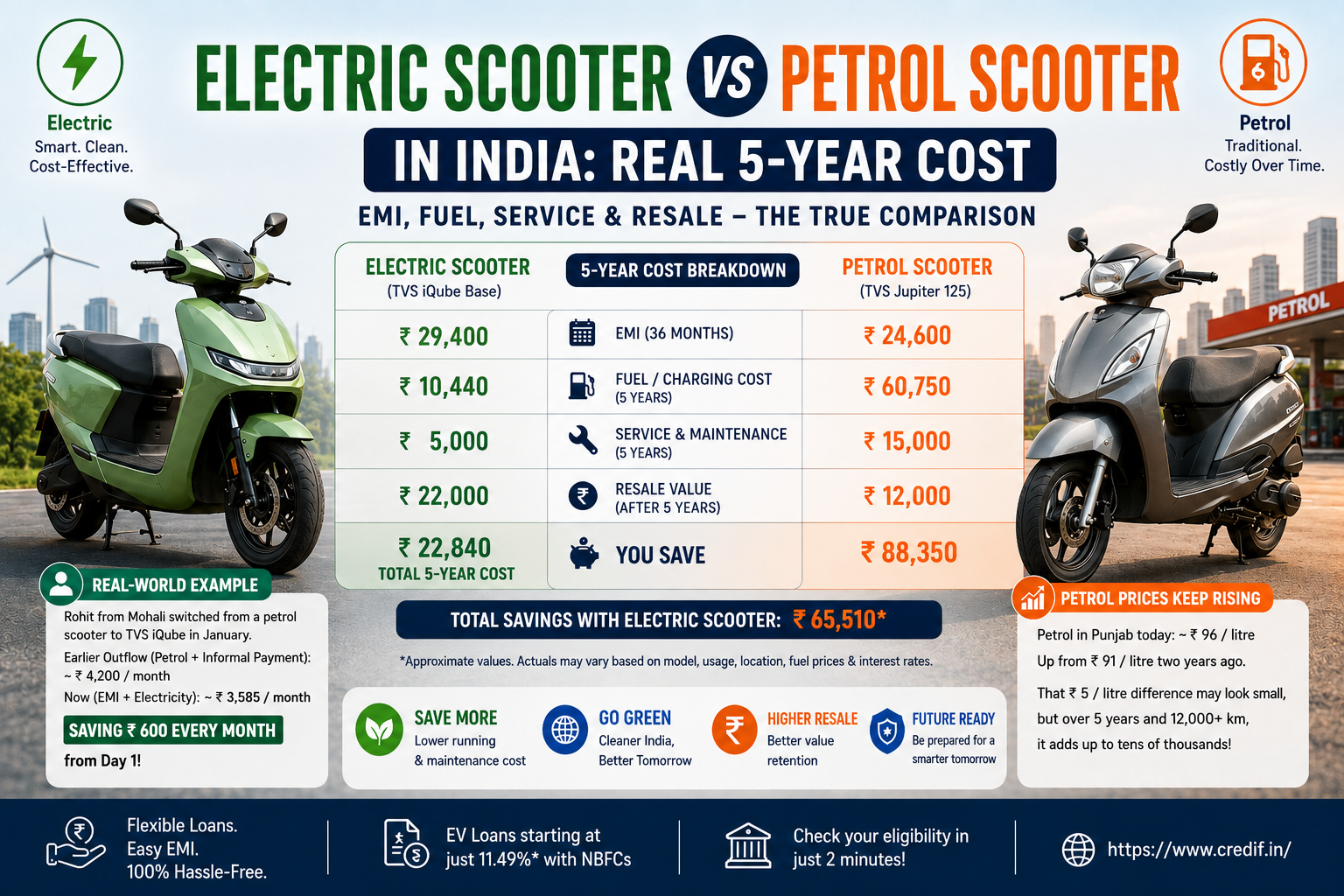
Running cost, which is the unglamorous one that nobody gets excited about and the one that actually does the heavy lifting across five years of ownership. We have run the full five-year electric-versus-petrol numbers in our electric vs petrol scooter cost comparison.
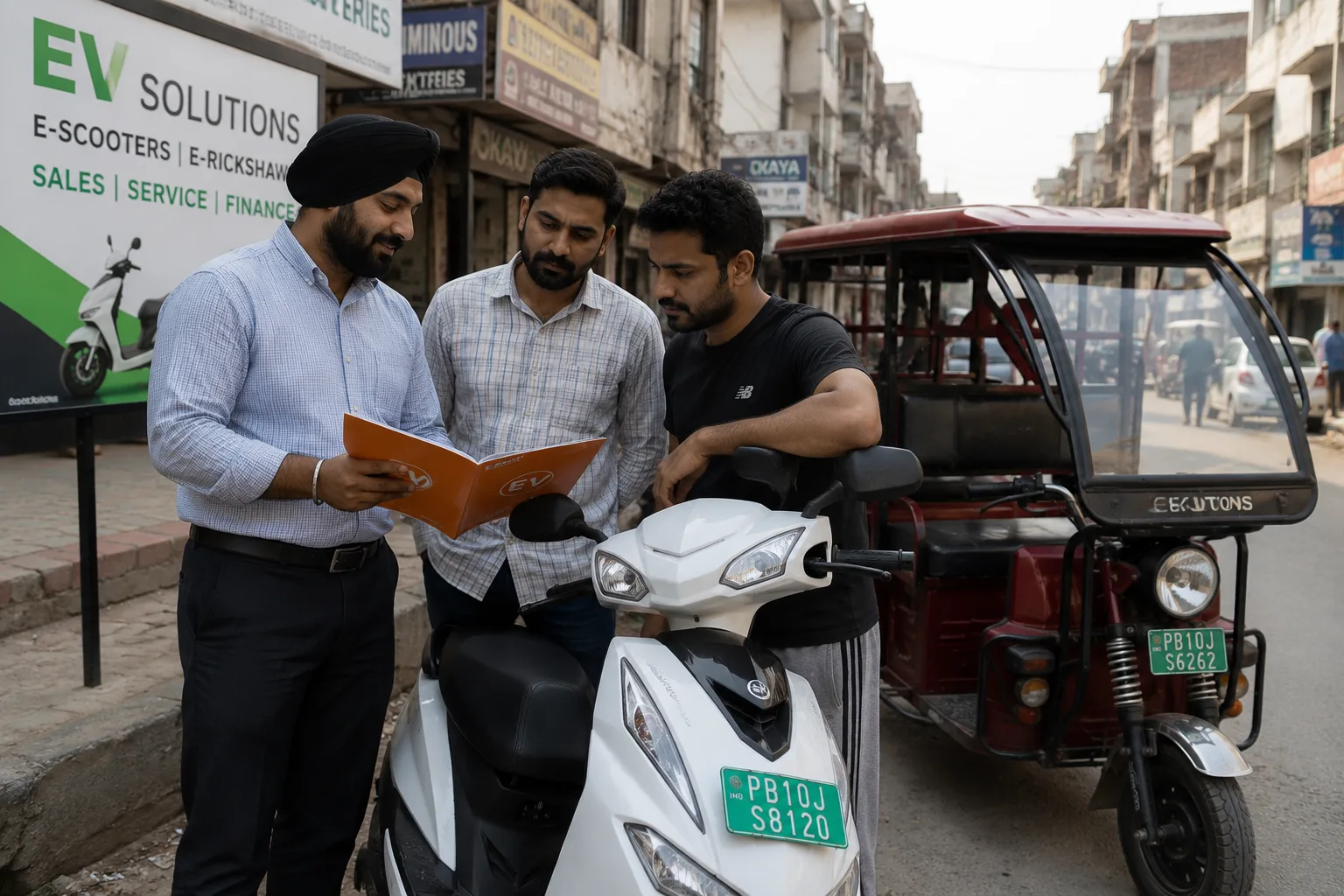
And for three-wheelers specifically, the central PM E-DRIVE incentive is still live until March 2028, unlike the two-wheeler version which closed at the end of July 2026. If that is your segment, our electric three-wheeler loan guide covers it.
| Benefit | Still available in 2026? | Where it applies |
|---|---|---|
| Section 80EEB deduction | Only for loans sanctioned before Apr 2023 | Income tax return, old regime |
| State road tax waiver | Often yes, varies by state | On-road price |
| State registration exemption | Often yes, varies by state | On-road price |
| PM E-DRIVE, two-wheelers | No, closed 31 July 2026 | Was applied at invoice |
| PM E-DRIVE, e-rickshaws | Yes, until March 2028 | Applied at invoice |
| Lower GST on EVs | Yes | Already in the quoted price |
Will 80EEB come back?
Every year around budget season somebody predicts a revival, and every year so far it has not happened.
It might. Sitting on a purchase decision waiting for it would be an odd thing to do though, given that it has been closed for over three years and the general direction of travel on EV support has been toward winding schemes down as segments mature rather than opening fresh ones.
If it does return it will almost certainly apply to loans sanctioned after the announcement, not retrospectively to yours.
What to do with all this
Find your sanction letter and check the date. That is the first and most important thing, and most people have never looked.
If the date falls inside the window and you are still repaying, ask your lender for an interest certificate for each financial year. You will need it at filing and lenders issue these routinely.
If you are eligible, run both tax regimes before you file rather than accepting the default. Any CA can do this in a few minutes and the difference is often larger than people assume.
If you are buying now, take the deduction out of your budget entirely and go and find out what your state offers instead. That number is real, it is available today, and it usually arrives sooner.
Back to Sunita
She could not claim it. That did not change and there was no clever way around it.
What she did do was go back through her arithmetic properly. Her state's road tax waiver turned out to be worth a decent amount on its own, which she had never counted because it came off the on-road price rather than arriving as something she had to claim — the same Punjab-side benefits we walk through in our EV loan in Ludhiana guide. And her running cost has landed well below what she budgeted, because she charges at home overnight on a cheap slab.
The car still works out. Just not for the reason she had written into row fourteen.
"Faayda tha, bas jahan soch rahi thi wahan nahi tha."
The benefit was there. Just not where she had been looking for it.
Bottom line
Section 80EEB gives a deduction of up to one and a half lakh a year on EV loan interest, but only where the loan was sanctioned between 1 April 2019 and 31 March 2023. If you bought your vehicle recently, you almost certainly cannot claim it, whatever the page you read said.
If your loan does fall inside that window you can keep claiming until it closes, and you must file under the old regime to do so, because the new default regime removes the deduction entirely.
For anyone buying in 2026, the real savings sit in state road tax and registration waivers and in running cost. Go and check what your state offers, and confirm anything tax-related with a CA rather than a showroom.
Talk to Credifin
Credifin is an RBI-registered NBFC financing electric two-wheelers, three-wheelers and more across India, with repayment built around what you actually earn.
079651-74500 | info@credif.in
Find your nearest branch →
Frequently asked questions
Can I claim Section 80EEB on an EV bought in 2026?
Almost certainly not. The deduction applies only where the loan was sanctioned between 1 April 2019 and 31 March 2023, so a new loan today falls outside the window.
What exactly does 80EEB cover?
The interest paid on a loan taken to buy an electric vehicle, up to one and a half lakh rupees in a financial year. The principal is not covered at all.
My loan was sanctioned in 2022 and I am still repaying. Can I claim?
Yes, subject to the other conditions. You can keep claiming each year until the loan is fully repaid, provided you file under the old tax regime.
Does 80EEB work under the new tax regime?
No. It is available only under the old regime, and since the new regime is the default you have to select the old one deliberately when filing.
Does it cover electric two-wheelers as well as cars?
Yes, both two-wheelers and four-wheelers, as long as the loan meets the sanction date and lender conditions. Hybrids are excluded.
Can a company or an HUF claim it?
No. The deduction is for individual taxpayers only.
What documents do I need?
The loan sanction letter showing the date, an annual interest certificate from your lender, the repayment schedule and the vehicle purchase invoice.
What if I use the EV for my business?
You can claim up to one and a half lakh under 80EEB and often treat interest above that as a business expense, with the vehicle registered to the owner or the business. Depreciation is a separate matter and worth discussing with a CA.
Will the deduction be reintroduced?
It has been predicted at several budgets and has not happened so far. If it returns it would most likely apply to loans sanctioned after the announcement rather than retrospectively.
Buying an EV this year?
Skip the tax-myth maths. Credifin finances electric two-wheelers and three-wheelers across India, with EMIs sized to your real income. Online application, quick decision.
Explore EV LoansThis might catch your interest