Pay Later and Consumer Loans: What They Actually Do to Your CIBIL Score
Lakshay Khanna·15 September 2026
A friend of mine got his home loan sanction delayed by almost three weeks last year. His salary was fine and his CIBIL was 760. The problem was on page two of his credit report: eleven small loan accounts he didn't remember taking.
They weren't fraud. They were his phone on No Cost EMI, a Pay Later limit he'd used for groceries, an earphone purchase split into three, and a couple of app loans from 2023. Each one was a proper loan in the bureau's eyes. The underwriter wanted an explanation for every single one.
That's the thing most people miss about pay later and consumer loans. They feel like a checkout option. The credit bureau sees them as loans.
First, what counts as a "consumer loan"
On your CIBIL report, a consumer loan usually means a small loan taken to buy a product. Think of the phone, TV, fridge or AC you bought on EMI at the store or online. "No Cost EMI" counts too. The seller just gives you a discount equal to the interest, but a lender still gives you a loan.
Pay Later, or BNPL, is a cousin of this. Flipkart Pay Later, Amazon Pay Later, LazyPay, Simpl and similar products are credit lines run with a bank or NBFC behind them. When you tap "pay later", a regulated lender is lending you that money. And regulated lenders report to credit bureaus. If you're weighing up one of these specifically, I've written a separate honest look at whether Flipkart Pay Later is good or bad.
Some show up as one credit line with a limit, like a credit card. Others show up as a separate small loan for each purchase. It depends on the lender, and that second type is how people end up with a report full of ₹800 accounts.
Report looking messy before a big loan?
A Credifin loan officer will read your credit report with you and tell you what an underwriter will actually see. Across 14 states, and the call is free.
Check your eligibility →The ways they can help
Let me start with the good part, because there is one.
If you're new to credit, with no credit card, no loans and no history, lenders have nothing to score you on. A small consumer loan or Pay Later limit, paid on time for 6 to 12 months, gives you a track record. Plenty of people in their early 20s got their first 700+ score this way.
Paying on time is the biggest single factor in your score. A clean run of on-time repayments, even on tiny amounts, counts in your favour.
So the product itself isn't bad. The trouble comes from how people use it.
The ways they quietly hurt
One late payment hits harder than people expect. A missed ₹1,200 Pay Later bill gets reported as a delay just like a missed home loan EMI would. Since 2025, lenders have had to update the bureaus every fortnight, so the mark shows up fast, within weeks rather than months. And once a 30-day delay is on your report, it stays visible for years.
Too many accounts look like a pattern. Ten small open loans tell an underwriter that you can't buy anything without borrowing, even if you can. This won't always lower your score by much. But a human looks at your report before approving anything big, and it will affect what they decide.
Every new limit can mean an enquiry. When you activate a Pay Later or take store EMI, the lender often checks your report. Several checks in a short window count against you, especially if you're planning a bigger loan soon.
High usage of a limit. If your Pay Later works like a ₹10,000 credit line and you keep it near ₹9,500 all the time, it reads like a maxed-out credit card. The scoring models don't love that.
The auto-debit trap. Most of these products take an e-NACH mandate on your bank account. If the account is short on the due date, the debit bounces. You get a late mark on the loan plus a bounce charge from your bank, often ₹250 to ₹600. That's a lot to pay on an ₹800 bill.
Does it lower your score just by existing?
Mostly no. An open Pay Later line that you use lightly and pay on time won't drag your score down by itself.
What drags it down is late payment, very high usage, and lots of enquiries close together. Separately, a long list of tiny accounts doesn't always hurt the number, but it makes your report look messy to a lender reading it.
A real-world check you can do today
Download your free credit report from CIBIL or any of the other bureaus (CRIF High Mark, Experian, Equifax). Go to the accounts section and count:
If an account you closed still shows active, raise a dispute with the bureau. It's free and takes a few weeks. If there's a DPD you don't recognise, dispute that too. Lenders do make reporting mistakes, and getting them fixed before a big loan application is worth the effort.
Our guide on why loans get rejected covers more of the small admin things that trip people up.
How I'd use pay later without wrecking anything
Consumer durable loans from an NBFC: any different?
Not really, in terms of how the bureau treats them. A consumer durable loan for a water purifier, geyser or solar panel is reported the same way. It's a proper loan with a fixed EMI and tenure.
The difference is in how you take it. You get one loan for one clear purchase, with paperwork you can read and a schedule you know. Compare that with a stack of tap-to-pay credit spread over five apps.
What if your score has already taken a hit?
It's recoverable. Clear any overdue amount first, since nothing improves until the overdue is zero. Then give it 6 to 9 months of clean payments on whatever's still open. Scores usually start climbing once new late marks stop appearing.
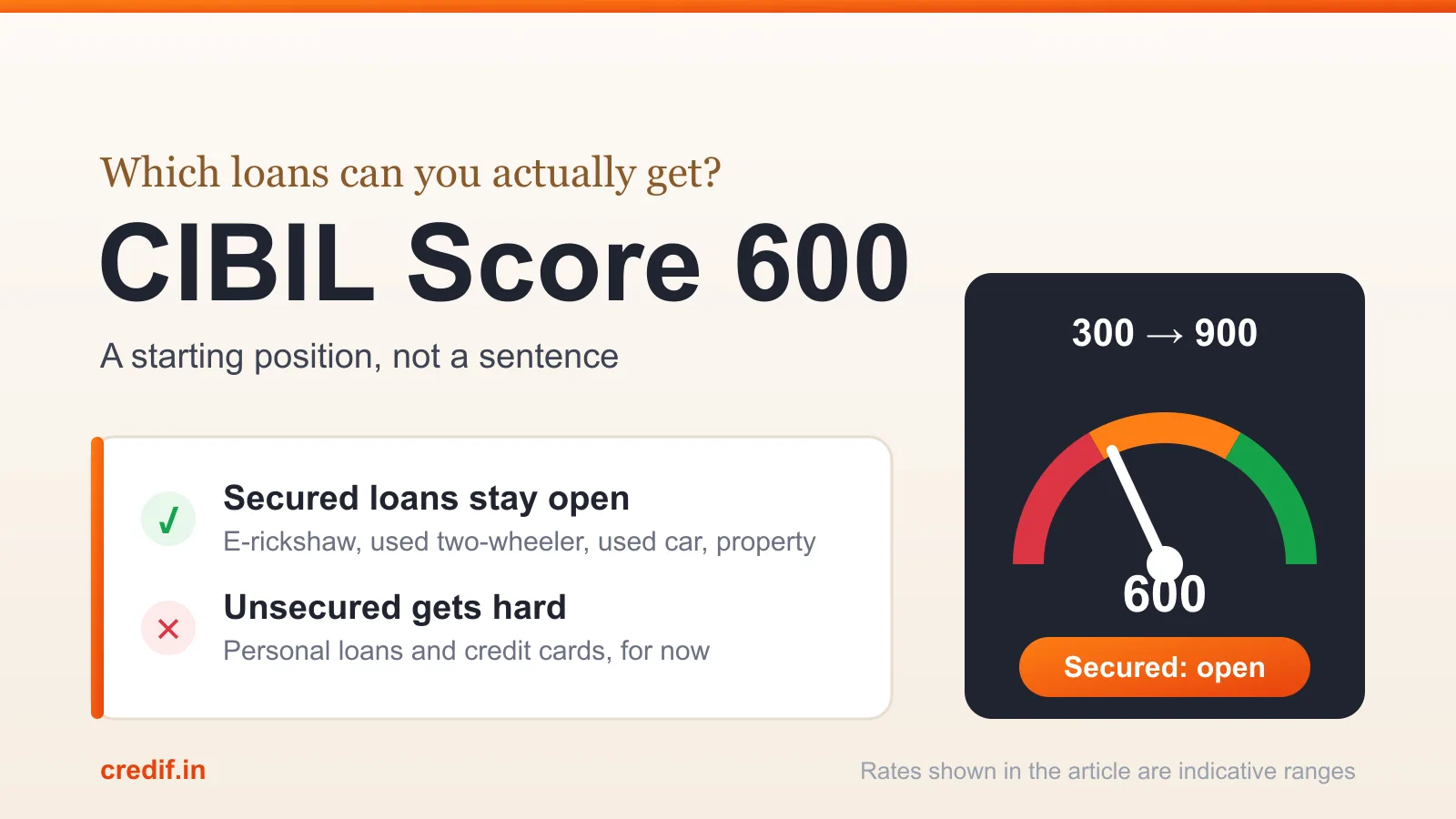
If you need a loan before that, secured loans are still on the table at lower scores, because the asset reduces the lender's risk. See which loans you can get with a 600 CIBIL score and our secured vs unsecured loans explainer. For the longer fix, here's how to improve your CIBIL score.
FAQs
Does Pay Later show on my CIBIL report?
Yes, if it's offered through a regulated bank or NBFC, which the major ones are. It shows either as a credit line or as separate small loans, depending on the lender.
Will one late Pay Later payment really affect my score?
It can. A delay reported by the lender lowers the score and stays on your report for years. Pay even small bills on time.
Is No Cost EMI a loan?
Yes. The seller covers the interest through a discount, but a lender still gives you a loan, and it's reported to the bureau like any other consumer loan.
Can Pay Later help me build a credit score from zero?
Yes. Used lightly and paid on time for 6 to 12 months, it's one of the easiest ways for a first-time borrower to get a score.
Should I close my Pay Later account before applying for a home loan?
Close it a few months before, not the week before. And make sure the closed status actually reflects on your report before you apply.
How long does a late payment stay on my credit report?
Payment history is generally shown for several years. Its impact on your score fades over time as newer on-time payments build up.
Need a loan, and worried about your report?
Credifin's loan officers look at the full picture, not just one number. If your report has a few small marks from pay later days, talk to us before giving up on a home loan or vehicle loan. We're in 14 states.
Ready when you are
Home loans, consumer durable loans and vehicle finance across 14 states, assessed on your real numbers.
Check your eligibility →Talk to Credifin
Credifin is an RBI-registered NBFC lending across 14 states and 200+ locations. CRISIL BBB- / Stable.
079651-74500 | info@credif.in
Find your nearest branch →
Credifin Limited is an RBI-registered NBFC, CRISIL BBB-/Stable. Loans at the sole discretion of the company. Credifin is not affiliated with any pay later or marketplace brand named above. This article is general information, not credit advice.