Education Loan for B.Tech: What It Actually Costs
Vansh Budhiraja·28 July 2026
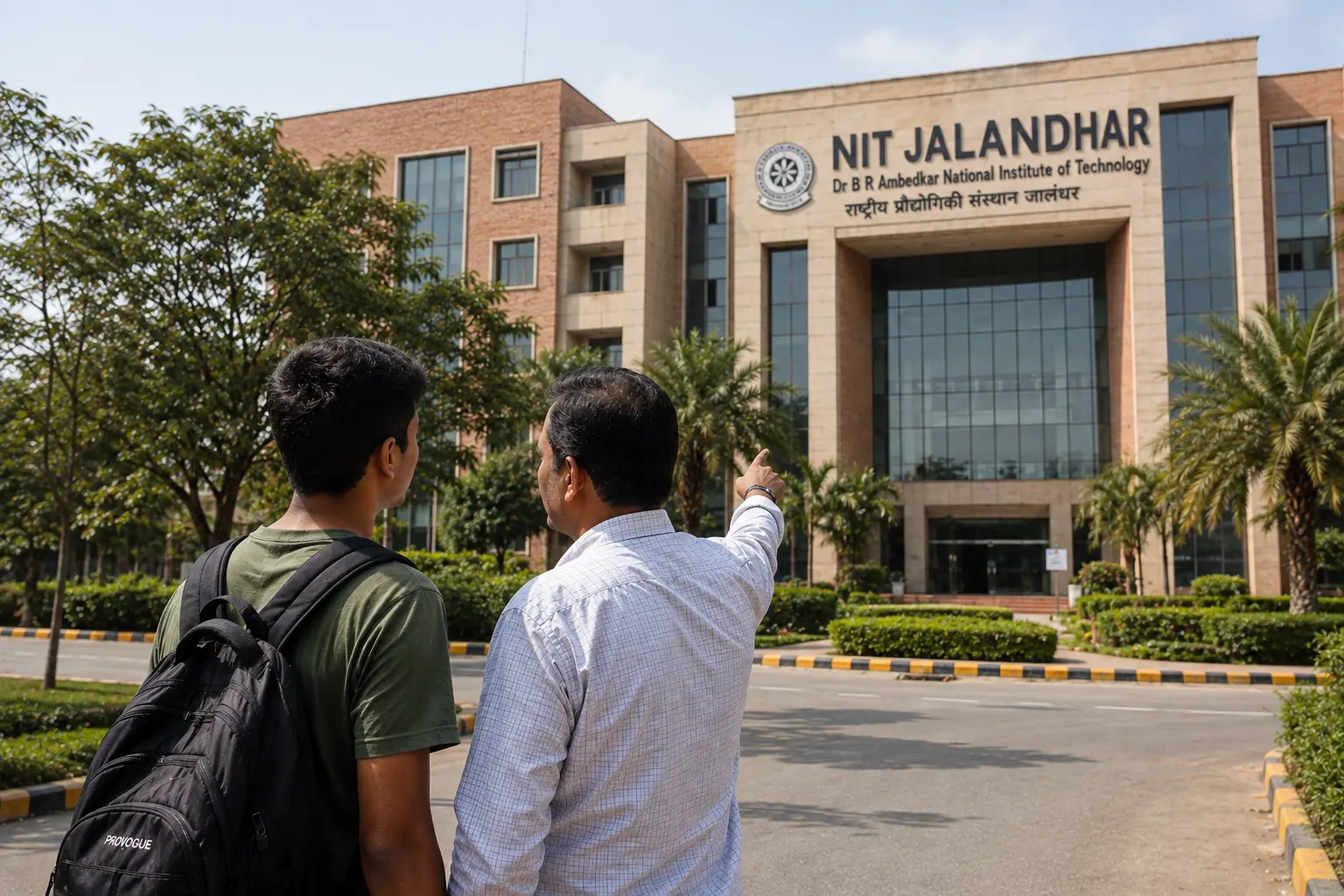
Sukhwinder runs a hardware shop in a market I pass most weeks. Small place, two shutters, sells everything from door hinges to submersible pumps. His son Arjun cleared his twelfth with decent marks last year and got a seat in a private engineering college. Good enough college. Not famous.
The family was thrilled for about a week. Then the fee structure arrived and the mood in that shop changed completely.
Sukhwinder came to me with the printout folded into four, the way people carry documents they have read too many times. He had already been to two banks. Both had been polite and both had talked to him about eligibility, co-applicant, collateral above a certain amount, moratorium. He understood roughly none of it, and he was too proud to keep asking the same question twice at a bank counter.
His actual question was much simpler than anything either bank had answered. "Total kitna banega?" How much will this cost me in the end? Not the loan amount. Not the EMI. The total. The number at the bottom, after everything.
Nobody had told him. And that is the strange thing about education loans in India. Every website will tell you the eligibility criteria and every bank will tell you the tenure options, but almost nobody puts the full four year number in front of a parent before they sign. So let me do that here, properly, with the arithmetic on the table.
One thing before we start. I am going to talk in ranges throughout, not exact figures. Interest rates on education loans depend on the lender, the course, the college, the loan size and the co-applicant's profile, and they move. Public sector banks generally sit at the lower end, private banks and NBFCs higher. Every number below is there to show you the shape of the thing, not to quote you. Your own lender's sanction letter is the only figure that counts.
Financing your child's college fees?
Credifin funds education across India, with repayment built around what your family actually earns. Online application, decision in 3 to 7 days.
Explore College Fee Finance →The four year bill is not the tuition fee
The first mistake almost every family makes is planning around the tuition figure, because that is the number printed largest on the fee structure. It is rarely more than two thirds of what the four years actually take out of the house.
Here is what the components tend to look like. The bands are wide on purpose, because a government college in a tier two city and a private university campus are not remotely the same product.
| What you pay for | Government college, per year | Private college or university, per year |
|---|---|---|
| Tuition and academic fees | Roughly Rs 50,000 to Rs 1,20,000 | Roughly Rs 1,20,000 to Rs 3,00,000 |
| Hostel and mess | Roughly Rs 50,000 to Rs 90,000 | Roughly Rs 80,000 to Rs 1,50,000 |
| Laptop, books, software | Rs 40,000 to Rs 70,000 in year one, less after | Rs 50,000 to Rs 90,000 in year one, less after |
| Exam, lab, transport, misc | Roughly Rs 10,000 to Rs 30,000 | Roughly Rs 20,000 to Rs 50,000 |
| Rough four year total | About Rs 5,00,000 to Rs 9,00,000 | About Rs 9,00,000 to Rs 18,00,000 |
Two things worth saying about that table.
First, fee structures at private institutions often rise a little each year. A family that budgets year one's figure four times over tends to be short by the third year. Ask the college directly whether the fee is locked for the full programme or revised annually, and get the answer in writing if you can.
Second, look at the laptop and books row. It is the one families forget, and it lands in the first month, at the same time as admission fees and hostel deposits and a trip to drop the child off. That first month is brutal on a household. If you are borrowing anyway, count it in rather than pretending it will come out of savings — or keep it separate with a small facility like uniform and book finance rather than dragging it through a ten year loan.
The part nobody explains: what happens during the course
This is where Sukhwinder's question really lived, and neither bank had touched it.
Most education loans come with a moratorium, sometimes called a repayment holiday. You do not pay EMIs while your child is studying, and usually for a grace period of six months to a year after the course ends. It sounds generous, and in a cash flow sense it genuinely is. No EMI for four and a half years is real relief for a family already paying for hostel visits and train tickets.
But interest does not sleep during those years. On most education loans it keeps accruing on whatever has been disbursed, and if you are not paying it, it gets added to what you owe. By the time the first EMI is due, the amount you are repaying is meaningfully larger than the amount that ever reached the college.
How much larger depends on the rate and on how the money went out. Education loans usually disburse year by year, as each year's fee falls due, which helps, because year four's money only accrues interest for a few months rather than four years.
Working through a four year course with a six month grace period, on a rate band of roughly ten to fourteen percent, the balance at the start of repayment tends to land somewhere around a third to a half above the amount borrowed.
| Amount that reached the college | Roughly what you owe when EMIs begin |
|---|---|
| Rs 4,00,000 | About Rs 5,35,000 to Rs 6,00,000 |
| Rs 8,00,000 | About Rs 10,70,000 to Rs 12,00,000 |
| Rs 12,00,000 | About Rs 16,00,000 to Rs 18,00,000 |
| Rs 16,00,000 | About Rs 21,40,000 to Rs 24,00,000 |
Read the last row slowly. Sixteen lakh borrowed can become well over twenty lakh owed before a single rupee of EMI has been paid, purely because the family chose the repayment holiday.
This is not a scam and nobody hid it. It is written into every sanction letter. It is just that the person explaining the loan at the counter tends to present the moratorium as a benefit and stop there, and the parent hears "no payment for four years" and not "the debt grows for four years." There is a fix, and I will come to it.
What the EMI looks like afterwards
Now the number Sukhwinder wanted. Take the grown balance, spread it over a tenure, and see what comes out. Same illustrative rate band as above.
| Amount borrowed | Tenure | Approximate EMI | Approximate total repaid |
|---|---|---|---|
| Rs 8,00,000 | 5 years | Rs 23,000 to Rs 28,000 | Rs 13.7 lakh to Rs 16.7 lakh |
| Rs 8,00,000 | 7 years | Rs 18,000 to Rs 22,500 | Rs 14.9 lakh to Rs 18.9 lakh |
| Rs 8,00,000 | 10 years | Rs 14,000 to Rs 18,500 | Rs 17 lakh to Rs 22.3 lakh |
| Rs 12,00,000 | 5 years | Rs 34,000 to Rs 42,000 | Rs 20.5 lakh to Rs 25.1 lakh |
| Rs 12,00,000 | 7 years | Rs 26,500 to Rs 33,500 | Rs 22.4 lakh to Rs 28.3 lakh |
| Rs 12,00,000 | 10 years | Rs 21,000 to Rs 28,000 | Rs 25.5 lakh to Rs 33.5 lakh |
There is the answer to "total kitna banega." Across these combinations, the total repaid works out to somewhere between about 1.7 and 2.8 times the amount that actually reached the college.
The tenure column is the one to stare at. Ten years feels kind, because the EMI is the smallest. It is also where the total is largest, by a wide margin. On a twelve lakh loan the gap between the five year and the ten year path can run to several lakh rupees of pure interest. Same degree, same college, same child. Different total, because of one box ticked at sanction.
That does not automatically make the short tenure right. A big EMI that a family cannot sustain leads to missed payments, and a missed payment costs more than interest does, because it damages the co-applicant's credit record and follows them into every future loan. The point is that the tenure decision is a real decision worth an hour of thought, not a default to accept.
Want the fee handled without a ten-year liability?
Credifin pays college and semester fees directly to the institution, repaid inside the fee cycle. Assessed on your family's real cash flow, not just a salary slip.
See How Fee Finance Works →The only test that actually decides whether it was worth it
Here is where I disagree with most of what gets written on this topic. The question is not whether an education loan is a good thing. The question is whether the EMI fits comfortably against the salary the degree realistically produces.
A rough rule that has held up well in practice: the EMI should sit under about a third of the graduate's take home pay, and ideally closer to a quarter, if the young person is going to service it themselves while also paying rent and eating.
Placement outcomes vary enormously, and I would not trust any single figure. What I would trust is the range of offers that a specific college actually produced last year, which you can get from its published placement report, and better still from two or three students who graduated from that exact branch a year ago. Find them. It is a phone call, and it is the most valuable research a parent can do before signing.
| Realistic starting salary | Likely take home per month | Comfortable EMI at about a quarter to a third | Loan size that fits |
|---|---|---|---|
| Rs 3 to Rs 4.5 lakh a year | Roughly Rs 22,000 to Rs 32,000 | Rs 6,000 to Rs 10,000 | Small. Around Rs 4 lakh, longer tenure |
| Rs 5 to Rs 8 lakh a year | Roughly Rs 35,000 to Rs 55,000 | Rs 9,000 to Rs 18,000 | Around Rs 5 lakh to Rs 8 lakh |
| Rs 9 to Rs 14 lakh a year | Roughly Rs 60,000 to Rs 90,000 | Rs 15,000 to Rs 30,000 | Rs 8 lakh to Rs 14 lakh is workable |
| Rs 15 lakh a year and above | Rs 95,000 and up | Rs 25,000 and up | Most fee structures are manageable |
Now put this table next to the previous one and the picture gets uncomfortable in a specific case. A twelve lakh loan carries an EMI in the twenties or thirties of thousands. If the college in question mostly places into roles paying three to four and a half lakh a year, that EMI is not close to affordable on the graduate's own income. It becomes the parent's EMI, for years, at exactly the age when the parent should be building a retirement corpus rather than servicing someone else's degree.
That is the mismatch worth catching before you sign, not after.
So is a B.Tech loan worth it?
My honest read, and it splits three ways.
Nobody wants to say that last part to a hopeful parent. It is still the truth, and a parent who hears it early has options.
Four ways to make the same degree cost less
None of these require a better rate. They are all structural, and any family can use them.
Service the interest during the course
This is the big one. If you can pay just the monthly interest while your child studies, even partially, the balance stops compounding on itself and the amount you start repaying stays close to what you borrowed. On a large loan this single habit can save more than any rate negotiation will. Ask your lender what the interest only amount would be per month during study. Many families find it is smaller than they feared, and many lenders offer a small concession for doing it.
Borrow per year, not for the whole programme
Sanctioning the full four years upfront feels tidy and organised. It also starts the interest clock on money the college does not need yet. Disbursal should follow the fee demand, not precede it.
Do not fund depreciating items over ten years
A laptop financed inside a ten year education loan is a laptop you finish paying for long after you have replaced it. Keep the loan for fees, and where possible pay for equipment separately and quickly.
Prepay in the early years
Interest is front loaded in any EMI schedule, so a lump sum in year one or two removes far more interest than the same amount in year six. If your child gets an internship stipend or a joining bonus, that is what it is for. Check the foreclosure and part payment terms before you sign, because they vary between lenders and some charge for it.
The deduction most families forget to claim
There is a fifth lever, and it sits in your tax return rather than your loan agreement. Under Section 80E, the interest paid on an education loan taken for higher studies is deductible from taxable income, with no upper limit on the amount, for up to eight years or until the interest is fully repaid, whichever comes first. It applies to the interest only, not the principal, and the loan has to be from a bank or an approved financial institution.
For a co-applicant in a taxable slab, that materially reduces the effective total. It does not change the arithmetic in the tables above, but it changes what the family finally bears. There is one catch that costs families the whole benefit — it is available only under the old tax regime, which is no longer the default. Our full guide to Section 80E and the old tax regime works through what it is worth and how to claim it. Confirm the current rules on the Income Tax Department portal and keep the lender's annual interest certificate, because you will need it at filing. It is also worth checking the government's Vidya Lakshmi portal, which lets you apply to multiple banks for an education loan through one form.
The alternative most families are never shown
There is a middle path between paying a semester fee out of pocket and sanctioning a twelve lakh loan for four years, and hardly anyone explains it.
For a single semester or annual fee, a fee finance facility works differently from a full education loan. The amount is small, the tenure is short, the money goes directly to the institution, and you repay it inside the fee cycle rather than for a decade. Because the tenure is short, the total interest paid stays small in rupee terms even where the rate is higher than a bank's education loan rate. The mechanics are the same ones we walk through in how fee financing works.
| Full education loan | Semester or annual fee finance | |
|---|---|---|
| Typical size | The whole programme | One fee cycle |
| Tenure | Often 5 to 10 years after study | Usually inside the year |
| Interest builds during study | Yes, unless you service it | Not really, you repay as you go |
| Collateral or guarantor | Often required above a threshold | Usually not, at small ticket sizes |
| Best when | Large total cost, long course, verified placement outcomes | Fee cycle cash flow is the problem, not the total |
The honest comparison is this. If the four year total is genuinely beyond the family's reach, you need an education loan and you should structure it well. If the family can afford the degree but not in the lumps the college demands, fee finance is the cheaper and less permanent tool, and it does not put a decade long liability on the co-applicant's credit report.
Plenty of families need both, in different years. That is fine. And if the plan involves a university abroad rather than an Indian campus, that is a different instrument again — our abroad education loan and the international education funding roadmap cover it.
Back to Sukhwinder
We sat in the shop and did the arithmetic on the back of an invoice pad. His son's four year figure came to around eleven lakh including hostel.
Two things changed once he could see it written down. He decided to pay the interest during the study years, funding it from the shop, which he could manage at a few thousand a month even in a slow season. And he dropped the hostel from the loan and arranged for Arjun to stay with a relative in the same city, which took a big slice off the total.
Then he did the thing I had suggested and did not expect him to do. He tracked down two boys from Arjun's branch who had graduated the previous year and asked them plainly what they were earning. One had a job in the range that college's placement report implied. The other had not found anything in the field and was doing something else entirely. Sukhwinder found that more useful than any brochure, and I think he is right.
He went ahead. Slightly smaller loan, interest serviced through the course, seven year tenure with a plan to prepay from year two. He said something at the end that stayed with me. "Pehle sirf EMI dikh rahi thi. Ab poora hisaab dikh raha hai." Earlier he could only see the EMI. Now he could see the whole account. That is the entire point of putting the arithmetic in front of a parent.
Bottom line
An education loan for a B.Tech is not expensive because of the interest rate. It gets expensive through three quiet decisions: taking the moratorium without servicing the interest, choosing the longest tenure because the EMI looks kindest, and borrowing for the whole four years including living costs and equipment.
Fix those three and the same degree, at the same college, costs meaningfully less. Across the ranges above, the total repaid tends to land somewhere between about 1.7 and 2.8 times what reached the college, and where in that range you land is largely up to you.
Before you sign, do two pieces of homework. Confirm whether the fee is locked or revised annually. And speak to two graduates from that exact branch about what they actually earn. Then check the EMI against that number rather than against a brochure. If it fits under about a third of a realistic take home salary, you are probably fine. If it does not, shrink the loan, not the ambition.
Where Credifin fits
If this is roughly your situation, here is how we approach it.
We finance education across India, including college and semester fees paid directly to the institution, annual fee finance, and support for the smaller costs like uniforms and books that never fit neatly into a bank loan. We assess families on bank statements and real cash flow, which is why shopkeepers, traders and other self employed parents get through with us when a salary slip based process cannot read them. The application is online, the decision for a clean file comes in 3 to 7 working days, and if you would rather sit across a desk and ask questions, you can walk into your nearest branch.
We will also tell you when a full education loan from a bank is the better instrument for your situation. On a large multi year programme it often is, particularly if you qualify at a public sector bank's rates. Knowing which tool you need is most of this decision.
Work out your number before you sign
Credifin funds college and semester fees directly to the institution, sized to what your family actually earns. Online application, decision in 3 to 7 working days, across India.
Apply for College Fee Finance →Talk to Credifin
Credifin is an RBI-registered NBFC financing education across India, with repayment built around your family's income.
079651-74500 | info@credif.in
Find your nearest branch →
FAQs
How much does a B.Tech actually cost in India?
Very roughly Rs 5 lakh to Rs 9 lakh across four years at a government college, and about Rs 9 lakh to Rs 18 lakh at a private college or university, once hostel, mess, laptop and exam costs are included. Tuition alone is usually well under the full figure, so plan on the total rather than the headline fee.
Does interest build up during the course?
On most education loans, yes. If you take the moratorium and do not pay the interest during the study years, it is added to your balance. Over a four year course the amount you owe when EMIs begin can be roughly a third to a half more than the amount that reached the college.
Is it better to take a short tenure or a long one?
A shorter tenure costs much less in total but demands a larger EMI. A longer tenure protects your monthly cash flow and costs more overall, sometimes several lakh more on a large loan. Pick the shortest tenure whose EMI you are confident of paying in a bad month, not just a good one.
What EMI can a fresh engineering graduate actually afford?
As a working rule, under about a quarter to a third of take home pay. Check it against the salaries that your specific college and branch genuinely produced last year rather than a national average, and ideally against what two recent graduates from that branch tell you they earn.
Do I need collateral for an education loan?
It depends on the amount and the lender. Smaller loans are often unsecured, and many lenders ask for security above a threshold. The co-applicant's income and credit history usually matter more than the student's marks, so check the co-applicant's credit record well before applying.
Can I claim tax relief on an education loan?
Section 80E allows a deduction on the interest paid on an education loan taken for higher studies, with no upper limit on the amount, for up to eight years or until the interest is fully repaid. It applies to interest only, not principal. Check the current position on the Income Tax Department portal.
Can I finance just one semester instead of the whole programme?
Yes. Semester or annual fee finance is a separate, smaller facility, usually repaid inside the fee cycle and paid directly to the institution. It suits families whose problem is the timing of the lumps rather than the total cost of the degree.
Can I prepay an education loan early?
Usually, and it is one of the most effective things you can do, because interest is front loaded in an EMI schedule. Terms on part payment and foreclosure differ between lenders, so confirm them before you sign rather than assuming.
Fee structure on the table?
Get a straight read on what the degree will actually cost your family, and which instrument fits. Credifin assesses real income and cash flow, not just a salary slip. Online application, decision in 3 to 7 days.
Explore Education FinanceThis might catch your interest